Quarterback guide
How to Read a Defense as a Quarterback
Read a defense in the same order every snap. Before the snap, count the safeties, check the corners and look for man or zone tells, using motion if you have it. At the snap, watch the safeties rotate to confirm the picture, then pick the side your play attacks best and read one defender there.
Updated October 2026
Why a Sequence Beats a Guess
Most young QBs try to look at everything at once, see eleven bodies moving, and throw to whoever they picked in the huddle. That is a guess with a nice spiral.
Each step below answers one question and throws away part of the defense. By the snap you want a likely coverage family, a side to work and one defender to read. You will not always be right, so make a plan that the first second after the snap can confirm or correct.
The Order to Read a Defense In
- Count the Safeties
One or two high tells you if the middle of the field is closed (MFC) or open (MFO).
- Check the Corners
Depth, leverage and eyes.
- Look for Man or Zone Tells
Alignment, eyes, and who lines up over the backs and tight ends.
- Use Motion If You Have It
Watch who travels with the player in motion.
- Watch the Rotation at the Snap
Eyes to the safeties first. Two high can spin to one high, and one high can rotate.
- Pick the Side
The half of the field your concept attacks best against what you now see.
- Read the Key Defender
One defender on that side decides the throw. Throw off what that defender actually does.
Step 1: Count the Safeties
Start deep and work forward. Look for a defender inside or approaching a box between the hashes at 15 to 18 yards deep: it is the best clue you get before the snap.
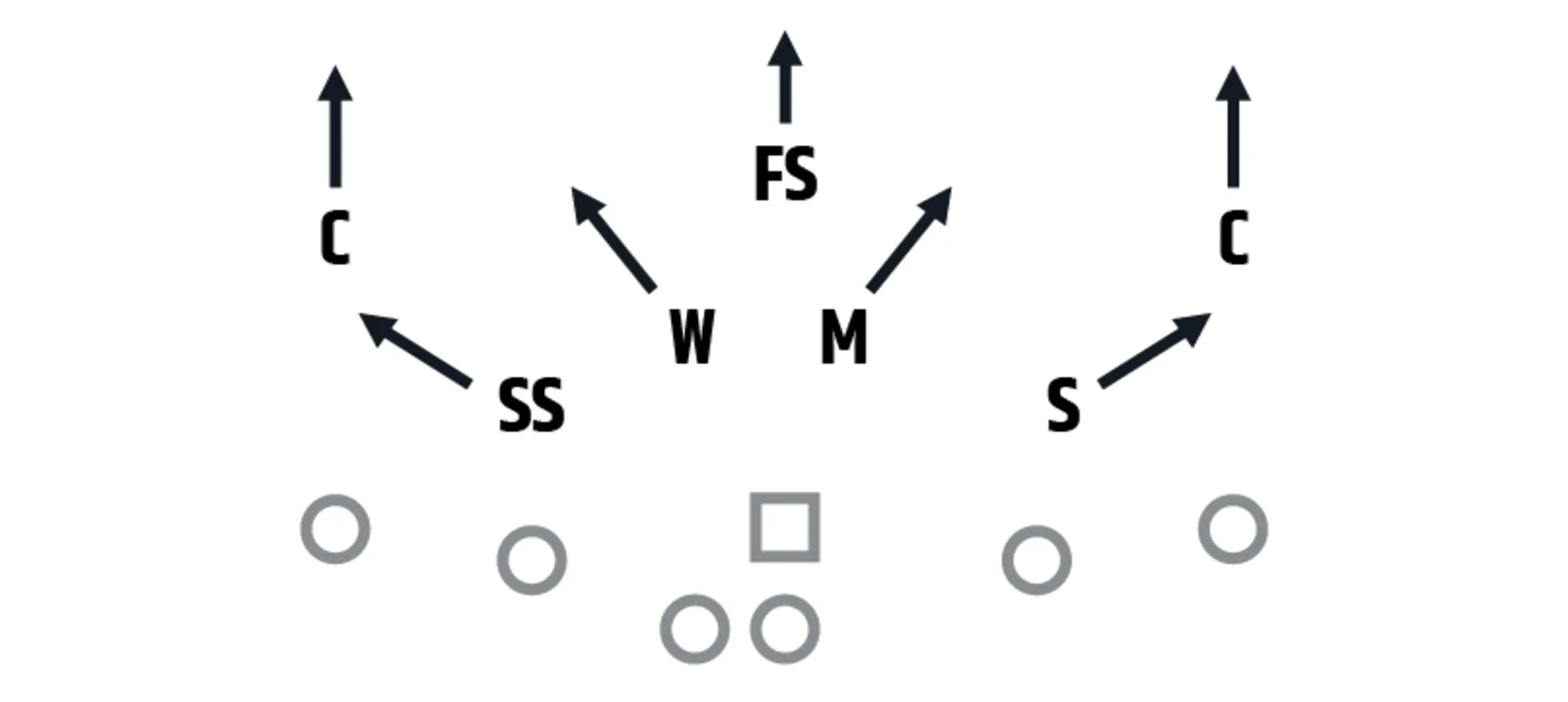
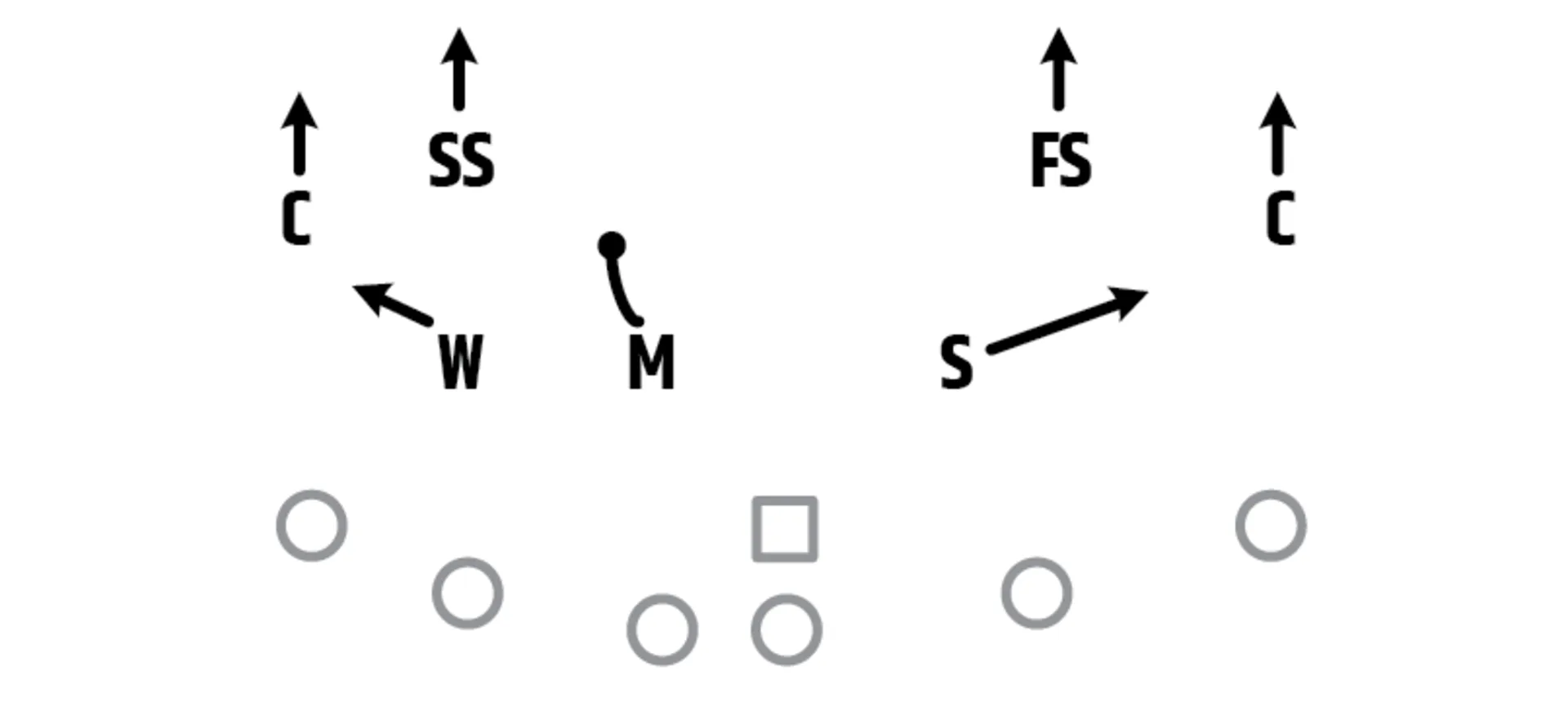
A post safety in that box closes the middle of the field (MFC, one high). Nobody there, with two safeties deep, opens it (MFO, two high). The table below has the coverages for each.
Two safeties deep and wide, outside the hashes, lean a halves coverage such as Cover 2 Tampa or Cover 5. Two sitting shallower near the hashes, eyes on the slots, lean quarters, where the safeties read the No. 2 receiver and play the run. Treat those as tendencies: defenses disguise, which is why step 5 exists.
What the Safety Count Tells You
| Look | Middle of the field | Coverages to expect |
|---|---|---|
| One high | Closed (MFC) | Cover 3, Cover 1, Cover 1 Robber |
| Two high | Open (MFO) | Cover 2 Tampa, Cover 4, Cover 6, Cover 5 (2-Man) |
Step 2: Check the Corners
Next, look outside: depth, leverage and eyes on each corner.
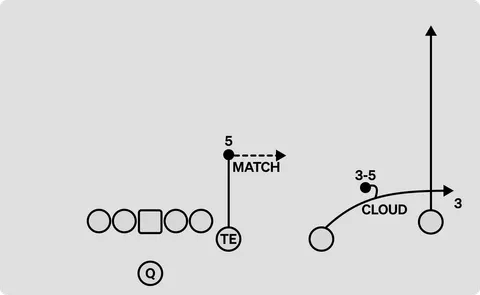
A corner 7 or more yards off is usually in a deep zone (a Cover 3 third or a quarter) or giving a cushion in man. A corner rolled up at 5 yards or less, outside the receiver, with a safety over the top, is a cloud corner who will sit in the flat, as in Cover 2 Tampa or the cloud side of Cover 6. Press can be man or a jam-and-bail zone, so press alone does not settle it.
Leverage is the shoulder of the receiver the defender sets up on. Inside leverage takes away slants and in routes and gives you outside-breaking routes; outside leverage takes away outside-breaking routes and the deep sideline and gives you the slant and the in. Even with the coverage wrong, leverage tells you where your receiver can win.
Eyes break the tie: zone defenders look in at you, ready to break on the ball, and man defenders look at their receiver.
Step 3: Man or Zone Tells
Man or zone changes how your routes win: against man by running away from the defender, against zone by settling in the space between two defenders.
- Defenders directly across from receivers, matching them as they split wide, lean man.
- A linebacker or safety over the running back or tight end, eyes on that player, leans man.
- Defenders spaced at landmarks (the hash, the numbers, halfway between the tackle and the slot) lean zone.
- One high safety plus press or tight alignment all over the field is Cover 1, a man look (MFC-Man).
Step 4: Use Motion to Get an Answer
Motion is a question you get to ask the defense. Watch the defender lined up over the player in motion.
A defender who runs across the formation with the motion is almost certainly in man. When that defender stays put and the defense slides (linebackers bump over, a safety adjusts), the defense is passing the receiver off in zone. Motion can also force the secondary to show its rotation early as it rebalances to the new strength of the formation.
Some good defenses play zone and still send a defender with the motion, so treat it as strong evidence and confirm at the snap.
Step 5: Watch the Rotation at the Snap
The pre-snap shell is what the defense wants you to see. The snap shows what it is really playing.
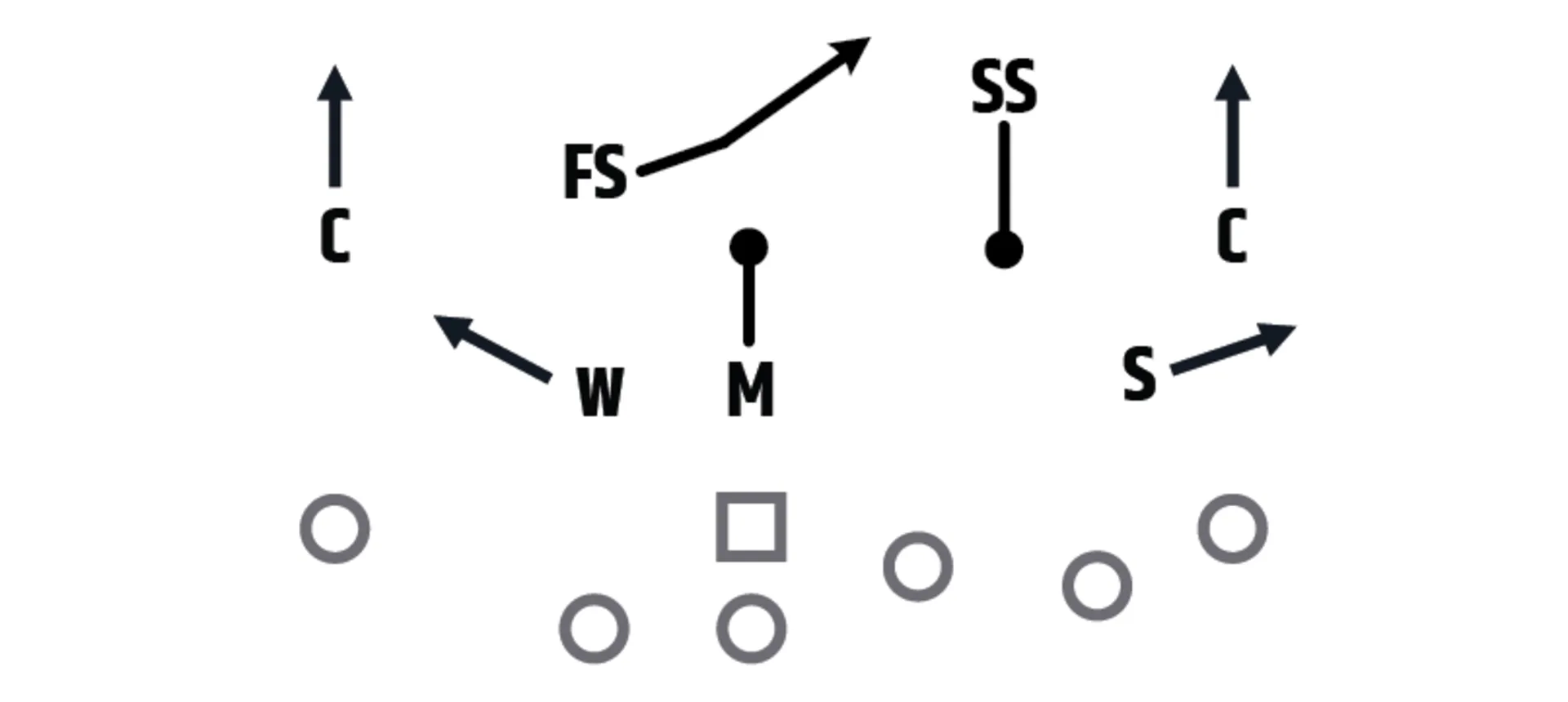
Two high with one safety driving down and the other sprinting to the middle means the field just closed: Cover 3 Buzz, Cover 1 Robber or another single-high rotation, and anything you planned against two high changes. One high that ends with both safeties deep has opened. A safety who stays in the middle while the corners bail means the coverage is what it looked like.
It all happens in the first two steps of your drop: eyes to the safeties first, then to your side.
Step 6: Pick the Side
Most pass concepts attack one side or one area of the field. Before the snap, pick the half that gives your concept its best look: a corner playing soft, a flat defender covering two receivers, more receivers than defenders, or a matchup you like in man.
Some plays set the side by rule (for example, work the three-receiver side against single high). Others leave it to you. Choose before the snap so your eyes have somewhere to go.
Step 7: Read One Defender
On your side, find the one defender who cannot cover everything and throw off what that defender does. The play was designed to put that player in a bind.
In Stick, read the Curl/Flat defender. In Snag against two high, read the cornerback low to high. In Hitch against one high, check the post safety, then read the defender between the hitch and the seam. In Mesh against man, find the defenders covering nobody (the rat and the post safety) and throw the crosser running away from them.
Concepts That Teach the Read
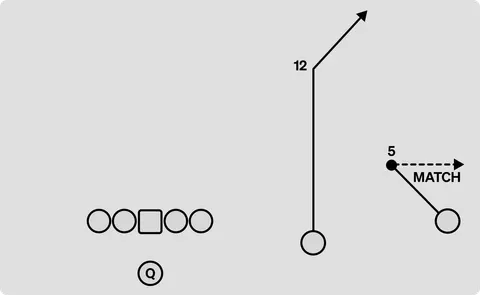
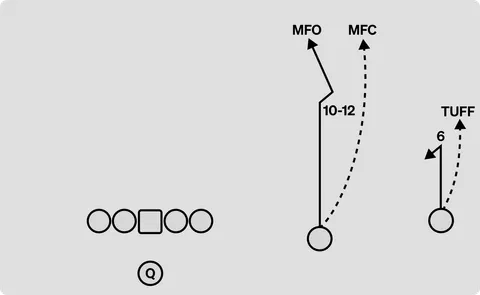
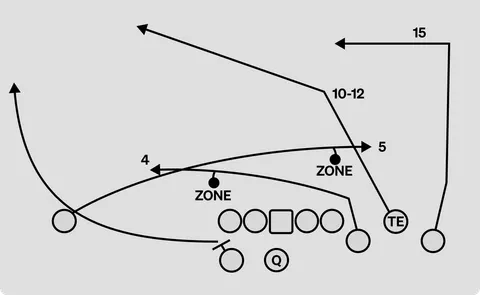
Same order on every snap: safeties, corners, man or zone, rotation, side, the one defender.
How to Get Better at It
Reading defenses is recognition, and recognition comes from seeing a lot of looks.
Film: pause every clip at the snap and say the coverage before you let it play, then watch the safeties rotate. Start with your own games, because you know the play call.
Quizzes: our Football IQ test, Guess the Coverage and the QB reads quiz are quick and show you exactly which coverages you mix up.
Reps: team reps are limited. A simulator like Crucible, an iPhone and Android app with no headset, lets you take the snap against a real coverage, make the throw and see what you missed, the closest thing to a team period you can get on your own.
Common Questions
What do MFC and MFO mean in football?
Middle field closed and middle field open, also written MOFC and MOFO. MFC means a post safety in the deep middle, inside or approaching 15 to 18 yards between the hashes (Cover 3 or Cover 1). MFO means nobody there and two high safeties (Cover 2 Tampa, quarters, Cover 6 or Cover 5).
How can a quarterback tell man from zone before the snap?
Alignment and eyes: man defenders line up across from receivers and watch them, while zone defenders line up at spots and watch the QB. Motion is the best test, because a defender who runs across the formation with the player in motion likely means man.
What if the defense disguises the coverage?
Expect it. Make your best pre-snap call, then look at the safeties first after the snap. When two high spins to one high, read it as a single-high coverage and adjust.
Where should a young quarterback start?
Counting safeties. Once a QB can reliably say one high or two high on every snap, add corner depth, then man or zone.