For coaches
How to Teach Quarterbacks to Read Defenses
Teach reads in layers, in the same order every time: safety shells, then corner and slot leverage, then how your concepts attack each look. Take each layer from the classroom to a walkthrough to a team period before adding the next. Cut-ups sorted by coverage, short quizzes and drills with a coach as the key defender do most of the work. The limit is almost always reps, so plan how your QBs will see more looks than team periods can give them.
Updated October 2026
Why the Order Matters
Hand a QB the whole defense at once and you get a player who has heard about pattern-matching quarters but cannot reliably tell one high from two high. They know a lot of words and still throw to the first read every time.
Each layer gives the next one something to attach to: a QB who counts safeties in a second can learn what corner depth means inside that shell, then why a concept is called against it. Skip a layer and the next one does not stick.
The Teaching Sequence
- Shells
One or two high: middle of the field closed (MFC) or open (MFO). Your QB says it on every snap.
- Coverage Families Inside the Shell
MFC (one high): Cover 3 or Cover 1, with Cover 1 the man look (MFC-Man). MFO (two high): Cover 2 Tampa, quarters, Cover 6 or Cover 5.
- Leverage and Alignment
Corner depth and leverage, the slot defender's alignment and eyes, and what motion shows. This decides man or zone.
- Rotation
Disguises and post-snap movement: two high spinning to one high, and where the QB looks first after the snap.
- Your Concepts
What each concept beats, which defender the QB reads, and where the ball goes for each thing that defender does.
- Situations
Down and distance, red zone, pressure looks and hot throws, so reads are learned in the context they get used.
Layer 1: Shells
Start with nothing but safeties. Show pictures, diagrams or film paused at the snap and ask one question: how many high. Run dozens of looks in a sitting until the answer is automatic.
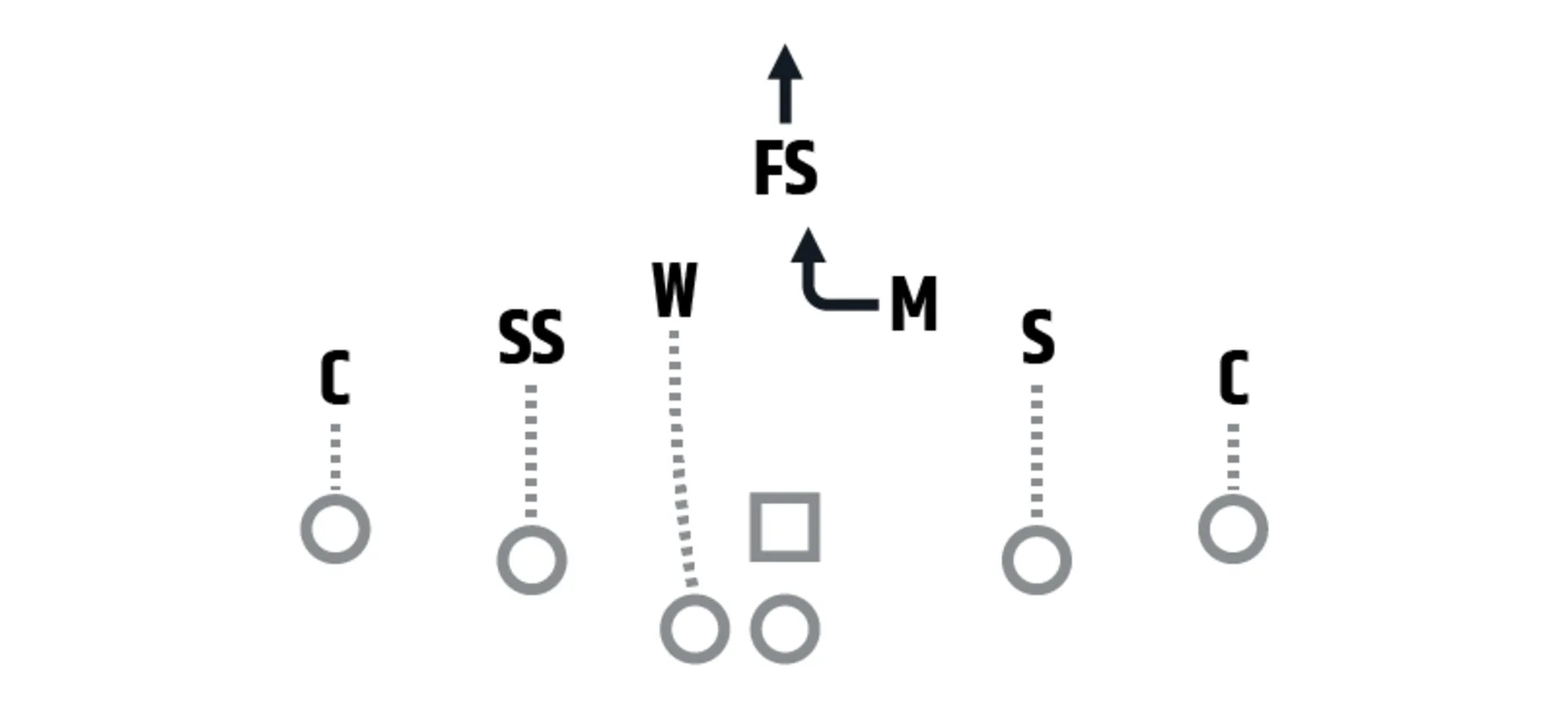
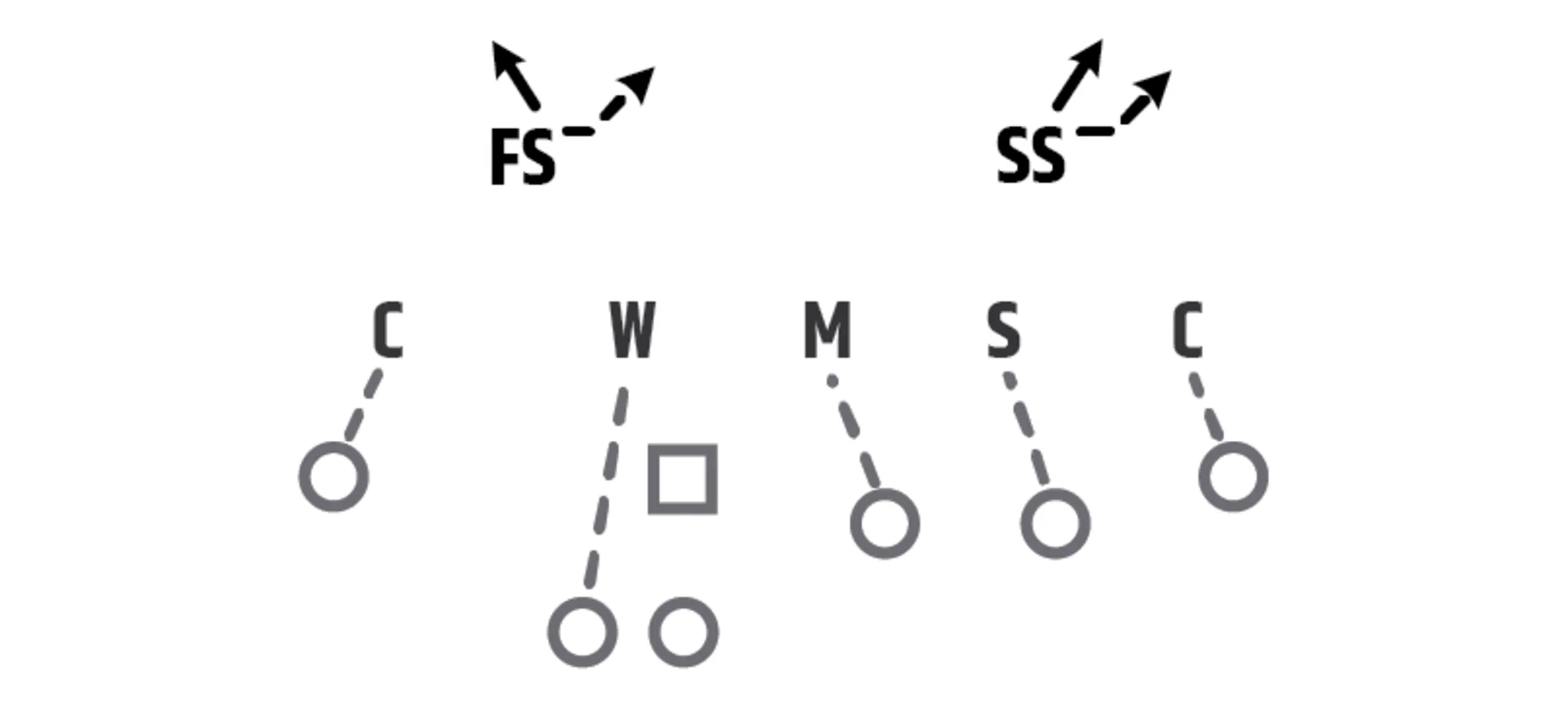
Then add depth and width: two safeties deep and wide versus two sitting shallower near the hashes. That is the first separation between halves coverages (Cover 2 Tampa, Cover 5) and quarters, and the time to teach that alignments are tendencies, because a defense can align one way and play another.
Layer 2: Leverage and Man or Zone
Once the shell is automatic, move to the corners and slot defenders: depth, leverage and eyes on each. Then teach motion as a question the offense asks. A defender who travels with the motion says lean man. A defense that bumps and slides says lean zone.
Show pairs of looks that differ in one detail. Cover 1 and Cover 5 are both man underneath, separated only by the safety count. Cover 3 and Cover 1 are both single high, separated by what the corners and underneath defenders do.
Layer 3: Concepts Against Coverages
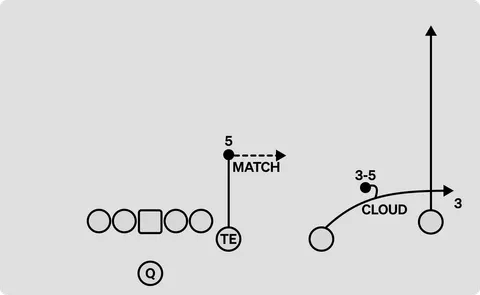
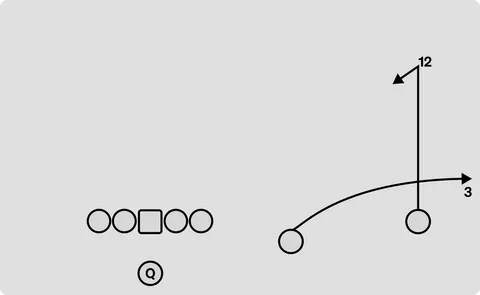
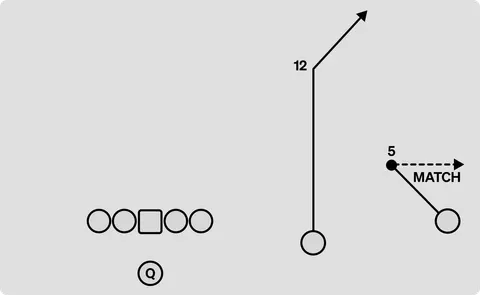
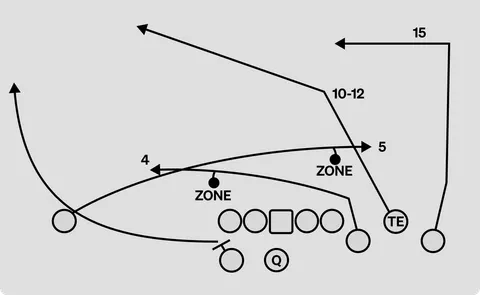
Now connect it to your playbook, concept by concept, with a rule for the throw. Stick against Cover 3: read the Curl/Flat defender. Snag against two high: read the cornerback low to high. Sail against Cover 3: read high to low, from the deep route to the sail to the short route underneath. Mesh against man: find the rat and throw the crosser running away from that defender.
Then show what each concept does against looks it is not built for, because your QB will see those too. Every concept needs an answer, even if it is the checkdown.
Good Teaching Concepts
Classroom, Walkthrough, Team
Classroom: whiteboard, diagrams and film, with nothing moving and time to ask why.
Walkthrough: a scout defense at walking speed. The QB calls the shell, the coverage and the read before the snap, walks through the throw, and you correct it on the spot. Most of the learning happens here, at no physical cost.
Team: full speed. Let it go, film it, and fix it in the next classroom session. A QB who cannot make the read in a walkthrough will not make it at full speed, so never skip the middle step.
Cut-Ups by Coverage
Sort your film by coverage, not by game. Ten Cover 3 clips in a row teach Cover 3 better than one game where it shows up ten times between other looks. Tag your own practice and game film by shell, coverage and the concept you ran.
Teach with them first: pause each clip at the snap, ask for the shell and the coverage, then let it run. Then test: shuffle clips from several coverages and let the misses tell you what to teach next.
Quizzes
Short, frequent quizzes do more than one long test: ten looks at the start of every meeting. Ask for the shell, then the coverage, then where the ball goes on a given concept, all in your terminology.
Free tools help when time is short. Our Football IQ test, Guess the Coverage and QB reads quiz are built from coverage diagrams and work on a phone.
Explaining a read in the meeting room is a start. Making it on time in a team period is the test.
Getting Reps Without a Full Team
Most programs do not have enough team periods to show a QB every look. Ways to get more:
- Coaches as defenders. A low-high or side-to-side drill needs two receivers and one coach playing the defender being read, and it trains the exact read in your concept with no scout team.
- Scout cards with managers or JV players at walking speed. Fast to set up, easy to change the look.
- Air with a called coverage. Run the concept on air, tell the QB the coverage before the snap, and have the QB name the right receiver out loud and throw it there.
- Film at home. Send cut-ups with questions attached.
- Simulator reps. A simulator app lets a QB take snaps against real coverages outside practice, with every decision recorded.
Use Your Own Words
Teach in the same words as your playbook. A coverage with one name in the meeting room and another on the field gets taught twice. Crucible's team plan brings your terminology, custom formations and game plans into the experience, so phone reps use your words, and Player Managers can track each QB's decisions from the portal.
Signs It Is Working
- Your QBs call the shell out loud before every walkthrough snap, without being asked.
- In team periods, the ball goes to the right receiver on time more often, and fewer throws go to covered receivers.
- Quiz scores climb on the coverages that used to be weak spots.
- In film review, the QB can tell you, in your terms, why the ball went where it did.
Common Questions
Where should a coach start when teaching a quarterback to read defenses?
With safety shells. Have the QB call one or two high on every look until it is automatic, then build coverage families, leverage and concept reads on top.
How do you teach reads without a full scout team?
Play a coach as the read defender in a two-receiver drill, run concepts on air against a called coverage, and add film, quizzes and simulator reps outside practice.
How long does it take a quarterback to learn to read coverage?
It depends on the player and the reps. Shells can become automatic quickly with daily practice. Reading concepts against disguised coverage at full speed takes much longer, which is why reps outside team periods matter.
Should film cut-ups be sorted by opponent or by coverage?
By coverage, for teaching reads. Opponent cut-ups are for game planning, once the QB can already identify the coverages.