Quarterback guide
Pre-Snap Reads: A Checklist for Quarterbacks
A pre-snap read is what you work out between breaking the huddle and the snap: the situation, the safeties, the corners, the slot defenders, the box count and what motion shows. It ends with a plan: your side, your read defender, your hot throw and your checkdown. After the snap, you stop predicting the coverage and start confirming it.
Updated October 2026
What a Pre-Snap Read Is For
Defenses disguise, so you will not know the coverage for certain before the snap. Walk up with a short list of possibilities and a plan for each, so the first look after the snap is a confirmation instead of a search.
With a plan, you throw on time. Without one, you are still working out the picture when the receiver breaks, and the throw comes late or never.
The Pre-Snap Checklist
- Situation
Down, distance, field position, hash, score and clock. Know the sticks before you look at a defender.
- Your Own Play
The concept, every route, the protection and your hot receiver. You cannot read the defense against a play you are still thinking about.
- Count the Safeties
One or two high, and how deep and wide they sit.
- Check Both Corners
Depth (press, 5 yards, 7 or more), leverage and eyes.
- Check the Slot Defenders
On the slot receiver leans man. Halfway between the slot and the tackle (the apex) leans zone.
- Count the Box
The Front-7 (defensive linemen, linebackers and the nickel) against the players you have to block them. More than you can block means the ball comes out hot.
- Motion
Running with the player in motion leans man. The defense bumping and sliding leans zone.
- Set the Plan
Side, read defender, hot throw and checkdown, plus any check or protection call your offense allows.
Situation First
QBs skip it, yet down and distance change what the defense will likely call and what counts as a good throw. On third and long, a defense is more willing to sit deep and make you throw underneath, where a 6-yard completion is not a win. On third and 2, expect tighter coverage and maybe pressure; the quick throw is often right.
The hash matters for spacing: the boundary (short side) and the field (wide side) are different sizes, and defenses often play them differently. Cover 6, for example, plays one coverage to the field and another to the boundary.
Safeties and Corners
Our guide on how to read a defense covers these in depth. In short: a post safety in the deep middle closes it (MFC) and two high safeties open it (MFO).
A pressed corner can be man or zone, so let the safeties and the slot defenders settle it.
Read each side separately, because split-field coverages look different on each half.
Slot Defenders and the Box
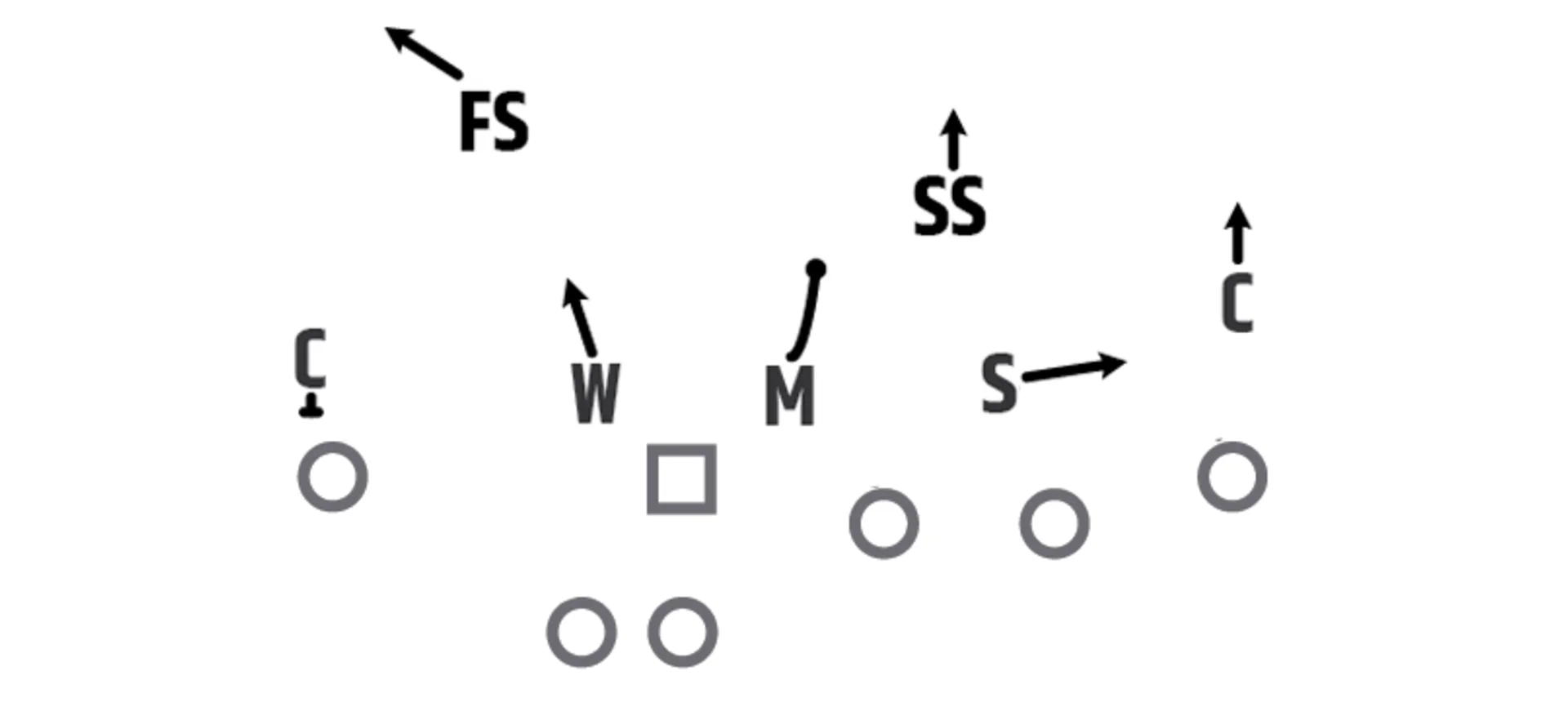
In man, the slot defender usually aligns on the slot, often inside, to run with that receiver. In many zones that defender sits at the apex to play the run and still get to the flat or the curl. One who walks all the way out over the slot in a zone look may mean that side is taking away the quick throw outside.
Then count the box, which Crucible calls the Front-7: the defensive linemen, linebackers and nickel, against your blockers. When they can bring one more than you can block, know who is unaccounted for, because that defender is usually why your hot route exists. Some offenses have the QB set or change the protection here, so learn what yours expects.
Defenses show pressure and drop out of it. Your job is to know where the ball goes if they come, not to guess whether they will.
Set the Plan
Until you can say all four before the snap, the read is not finished.
- The side: the half of the field your concept attacks best against this look.
- The read defender: the one player on that side whose movement decides the throw.
- The hot throw: where the ball goes right now if pressure comes free.
- The checkdown: the safe throw when the read is covered.
Pre-snap is a prediction. Post-snap is a confirmation. Your first look after the snap goes to the safeties, every time.
What Changes After the Snap
Watch for these in the first two steps of your drop.
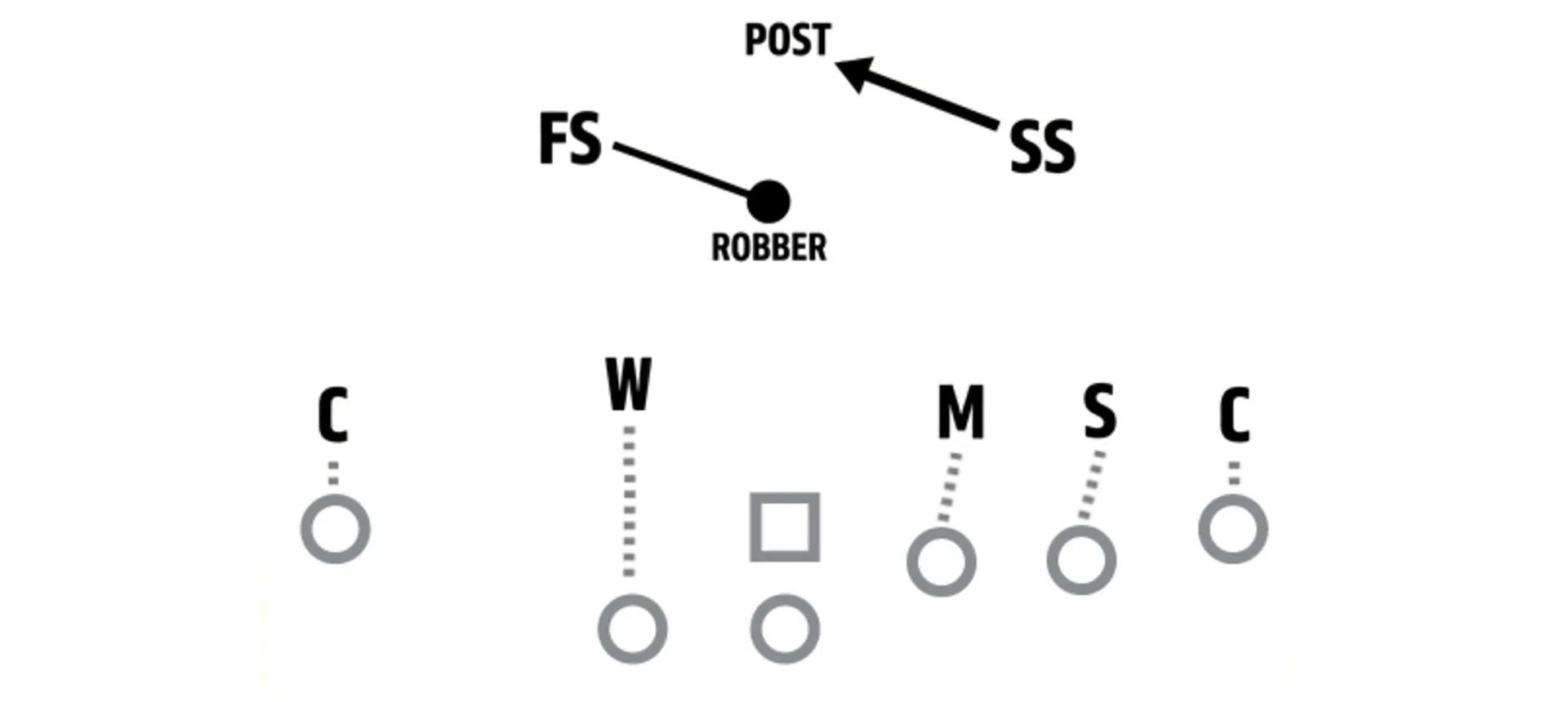
- The safeties rotate: two high spins to one high (Cover 3 Buzz, Cover 1 Robber), or one high splits to two. Switch to the plan you made for the new coverage family.
- The corners bail. A corner who showed press and runs to the deep third is in zone, so throws in front of that corner open up.
- A dropping defender rushes, or a rusher drops. An unaccounted rusher means the ball goes hot. A defensive lineman dropping into a short zone usually sits in a throwing lane, so find that lineman before you throw.
- Defenders run with receivers (man) or settle at spots with eyes on you (zone).
- A pattern-reading safety jumps a route. Against quarters the safeties read the No. 2 receiver, so when No. 2 goes short, expect the safety to help on No. 1.
Pre-Snap Clue and What to Confirm at the Snap
| Pre-snap clue | Likely | Confirm after the snap |
|---|---|---|
| One high, corners off | Cover 3 | Corners bail, underneath defenders spread to spots |
| One high, tight on receivers | Cover 1 | Defenders turn and run with receivers |
| Two high, deep and wide | Cover 2 Tampa | Corners sit in the flats, safeties bail to halves, the Mike runs the deep middle |
| Two high, shallow near the hashes | Cover 4 | Safeties sit and read No. 2 instead of bailing |
| Two high, defenders tight on receivers | Cover 5 (2-Man) | Defenders trail receivers with safeties over the top |
How to Practise Pre-Snap Reads
Run the checklist out loud. In film study, pause at the snap and say every step: situation, safeties, corners, slot, box, motion, plan. It is slow at first, but the order sticks within a few weeks.
In walkthroughs, ask your coach for a few extra seconds before the snap, say your read, then check it against what happened.
On your own, our Guess the Coverage page shows a shell and asks you to name it. Crucible, an iPhone and Android app with no headset, lets you take a snap against a real coverage, make the throw and see what you missed.
Common Questions
What should a quarterback look at first before the snap?
The situation, then the safeties. Down and distance tell you what you need, and the safety count tells you if the middle of the field is open or closed.
How long should a pre-snap read take?
As long as the play clock and your cadence allow. Experienced QBs run the same order on every snap by habit and only slow down when something looks unusual.
Is the pre-snap read ever wrong?
Often, because defenses disguise. The pre-snap read gives you a plan for each likely coverage, and the first look after the snap tells you which plan to use.
What is a hot throw?
A quick throw that answers pressure. When the defense brings more rushers than you can block, the hot receiver should be open right away in the hole the free rusher leaves.