How to beat it
How to Beat Cover 4 (Quarters)
Beat Cover 4 underneath and with conflict, not with verticals. With four deep and three underneath, the flats, hitches in front of deep corners and crossers under the linebackers are open. For a shot, push No. 2 vertical: the safety has to carry No. 2, leaving the outside receiver alone with the corner.
Updated October 2026
Where Cover 4 Is Weak
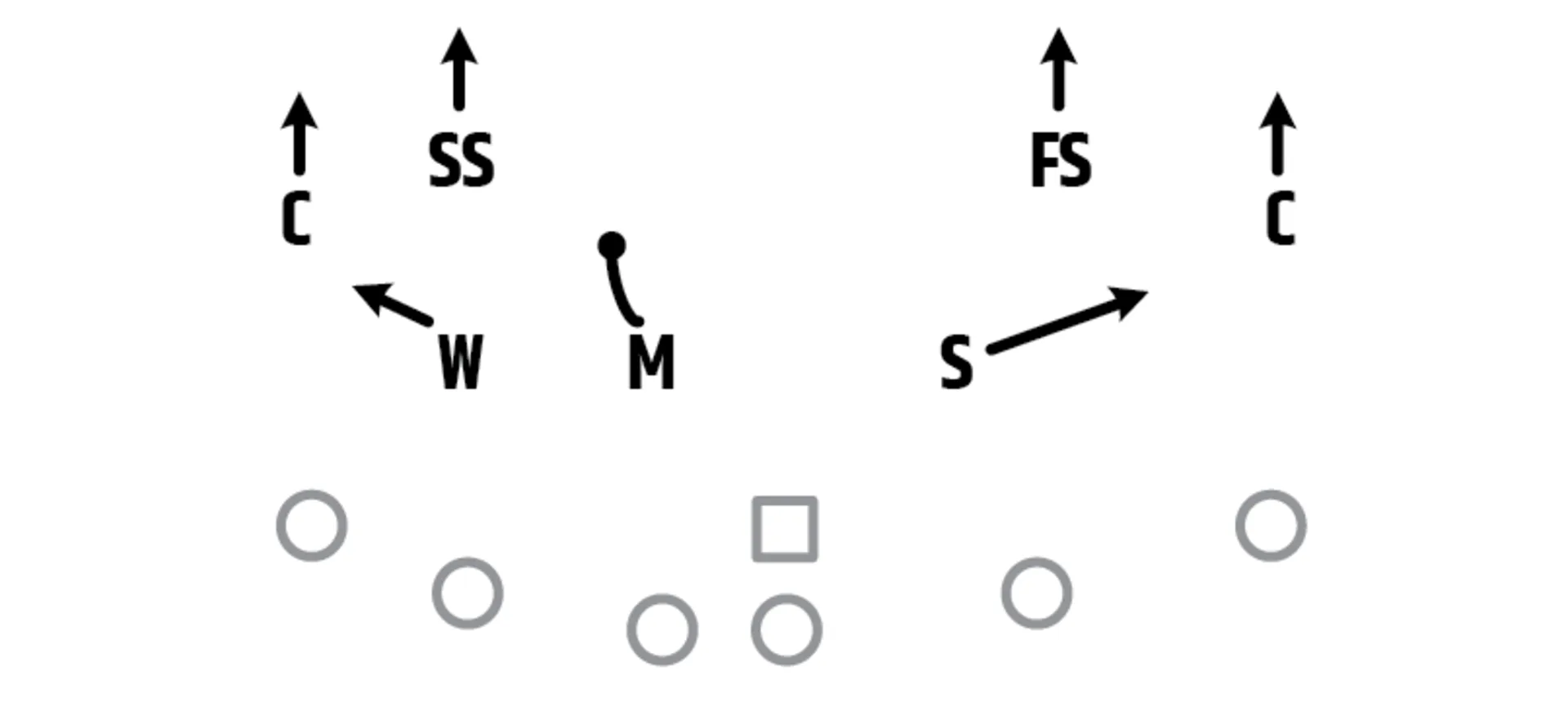
Each safety reads the No. 2 (inside) receiver on that side. If No. 2 goes vertical, the safety takes No. 2; if No. 2 breaks short or outside, the safety helps the corner on No. 1. Deep throws are hard, so take the rest of the field.
- The flats. Three underneath defenders have to cover a lot of width.
- In front of the deep corners, where a hitch at 5 to 6 yards is there on rhythm.
- Underneath crossers, away from the four deep defenders.
- The safety's rules. A route that changes after the read can catch the safety on the wrong man.
- Play action. Safeties who fit the run come up and empty the space behind them.
Five Cover 4 Beaters and the Read on Each
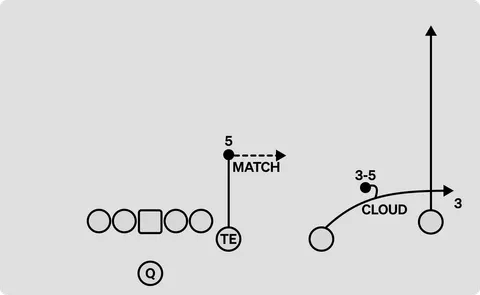
- Stick
The stick at 5 yards and the flat attack the outside linebacker or nickel, alone in the quarter-flat zone, while the go route keeps the corner deep. If the flat defender widens, throw the stick. If it sits on the stick, throw the flat.
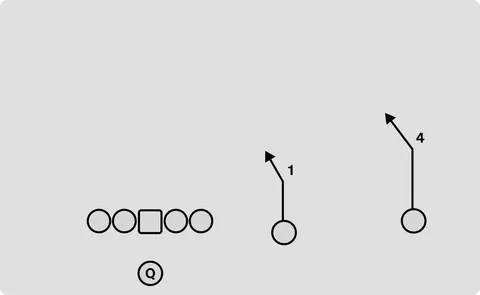
- Tosser and Option
Against two-high looks, Crucible's quick-game plays leave the slant-flat side (their one-high answer) for the other half: Tosser, a lookie and a slant worked inside out, or Option, a go and an option route worked outside in, each with the back as the outlet.
- Hitch
The outside receiver stops at about 6 yards while the slot's seam makes the safety commit. If the corner is 7 yards or more off and the quarter-flat defender is not under the hitch (free access), throw it on rhythm. Do not take the seam into a safety sitting on it.
- Mesh and Drive
Shallows run under the three underneath defenders. Mesh shallows sit in the windows; Drive's 12-yard route high-lows the middle linebacker, so throw opposite that linebacker. Be careful with the deeper route if that side's safety is reading No. 2 short and coming down.
- Scissors and Verticals by No. 2
No. 2 pushes vertical, so the safety has to carry it, and Scissors crosses the routes: No. 1 breaks inside, No. 2 breaks outside behind the corner. If the safety carries No. 2, No. 1's inside break is one on one. If the safety jumps No. 1, throw No. 2's outside break toward the sideline. A strong-side linebacker who sinks under that break leaves the diagonal underneath.
Concepts That Beat Cover 4
 StickStick / Arrow / Go
 TosserLookie / Slant
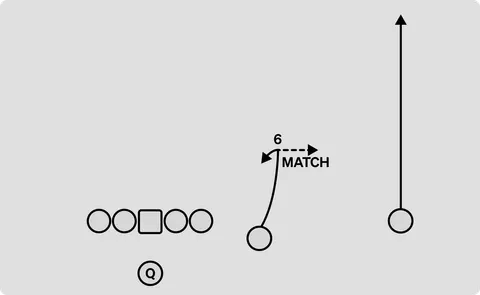 OptionOption / Go
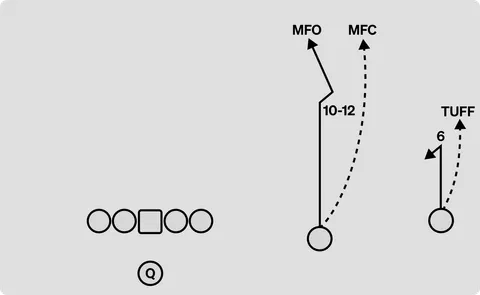 HitchSeam / Hitch
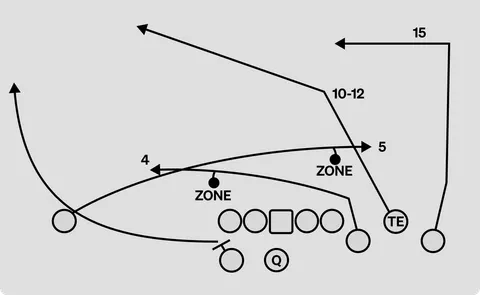 MeshShallow / Rail / Cross / In
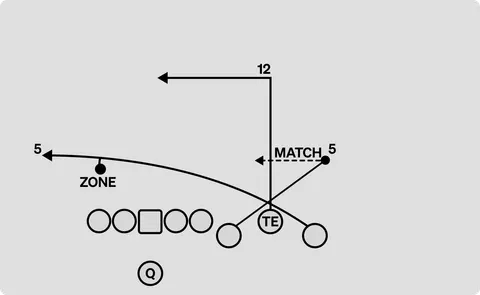 DriveAngle / Basic / Shallow
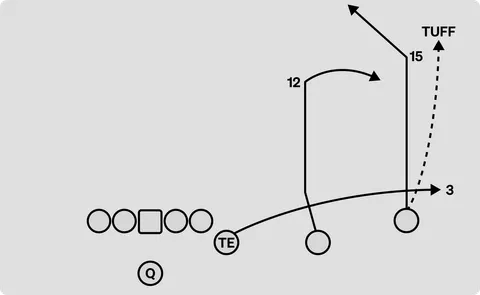 ScissorsDiagonal / Sail / Pogo
Situations
- Against trips. Base quarters has no clean answer for No. 3 going vertical, so defenses adjust, often by leaving the backside corner alone on the single receiver. See Cover 4 vs trips.
- Run downs. Quarters is a run defense as much as a pass defense, so play action and a post behind the safeties are worth a shot.
- Third and long. Quarters will give you the throw short of the sticks and rally to it. Pick a curl or in route that gets past the marker.
- Against Cover 6. Throw underneath on the quarters side and attack the sideline hole on the two-deep (half-field) side.
- In 7v7 passing tournaments. Four deep defenders in a small space with no pass rush makes deep throws hard. Work the flats and underneath until the safeties come up.
Mistakes to Avoid
- Sending four receivers vertical. Four deep routes against four deep defenders is what the coverage wants.
- Throwing the seam into the safety, who is reading the slot and often sitting right on it.
- Assuming MFO (two high) is Cover 2 Tampa. Quarters safeties are usually shallower, around 10 to 12 yards, and the corners play off where Cover 2 Tampa corners would squat. Confirm it at the snap by the safeties' departure angle: quarters safeties sit and read No. 2, Cover 2 Tampa safeties bail to their halves.
- Getting impatient. Quarters gives up short completions to stop the big play. Take them and stay on schedule.
Common Questions
What beats Cover 4 quarters?
Quick throws to the flats, hitches in front of deep corners, shallow crossers, play action against safeties who fit the run, and route combinations that make the safety choose between No. 2 and No. 1.
Why do verticals struggle against Cover 4?
Quarters puts four defenders deep, one for each vertical route, and the safeties are reading the inside receivers. Every vertical has a defender on it.
How do you identify Cover 4 before the snap?
MFO (two high safeties), usually a little shallower than in Cover 2 Tampa, with both corners off the ball. After the snap, the safeties' departure angle confirms it: they sit and read the inside receivers, where Cover 2 Tampa safeties bail to deep halves.