Coverage vs formation
Cover 4 (Quarters) vs Trips
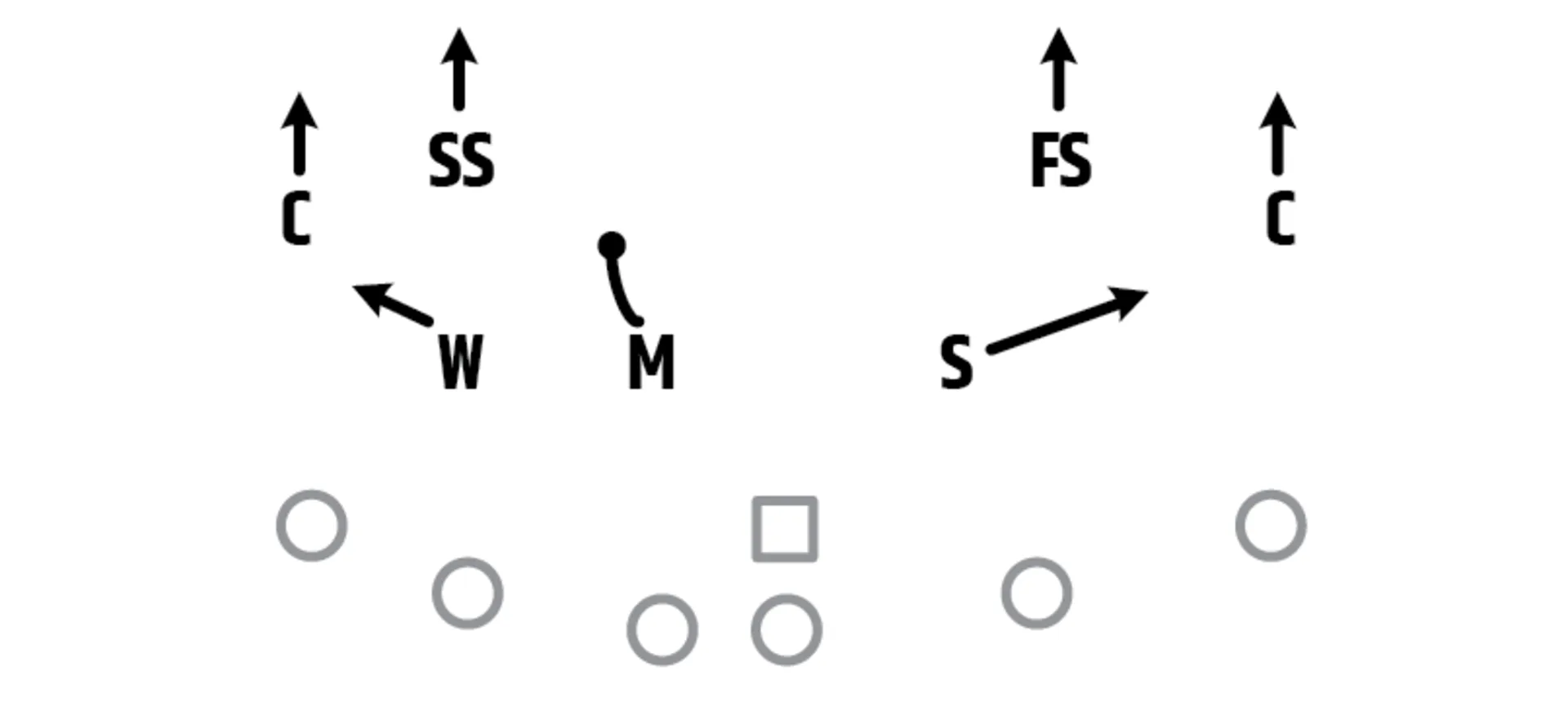
Base quarters is built for two receivers per side: the corner plays No. 1 and the safety reads No. 2. In trips, neither the corner nor the safety on that side reads No. 3, so a No. 3 vertical has no natural defender. The usual fix sends the backside safety to No. 3, which leaves the backside corner alone. That makes the No. 3 vertical and the backside receiver the two stress points.
Updated October 2026
Quarters Against 2x2 and Against 3x1 Trips
| Quarters vs 2x2 | Quarters vs 3x1 trips | |
|---|---|---|
| Corner's job | No. 1 to that side | No. 1 to that side |
| Strong-side safety reads | No. 2 | No. 2, with No. 3 now inside the safety |
| Who has No. 3 vertical | There is no No. 3 | Usually the backside safety, or a linebacker carrying the route |
| Backside receiver | Corner with safety help | Often corner alone, no safety help |
| Underneath defenders | Three, balanced | Three, pulled toward trips |
| Where it is stressed | Flats, crossers, safety conflict | No. 3 vertical, backside isolation, trips-side flat |
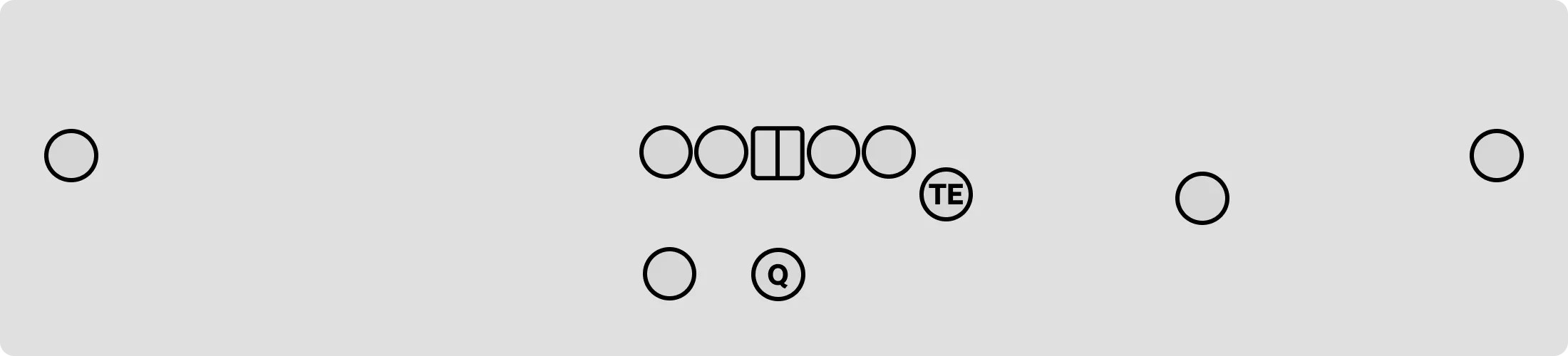
How Quarters Adjusts to Trips
- Backside safety takes No. 3. Sound against the seam, but the backside corner now plays the single receiver with no safety help. Crucible calls this check Cover 4p: the backside safety poaches the No. 3 vertical.
- A linebacker carries No. 3. The backside safety stays home, but a linebacker is now running deep with a receiver.
- Rotate to a three-deep look, like a Cover 3 shell or a split-field coverage such as Cover 6.
- Play man on the backside. The backside corner takes the single receiver man to man, freeing the backside safety to help toward trips.
Where to Throw
- No. 3 Vertical
Send No. 3 straight up the seam. A backside safety who is late or bites on a run fake leaves it open, and a linebacker carrying it is a matchup you want. If the safety stays home on the single receiver, throw the seam.
- Backside Isolation
When the backside safety moves to No. 3, the single receiver is one on one with a corner and nobody inside. Pick the slant, in route or post before the snap and throw it on time.
- Trips-Side Flat and Stick
Three underneath defenders pulled toward three receivers still leave the flat thin, so stick and flat routes to the trips side attack the outside underneath defender. When No. 2 stays short, the safety's rule is to help on No. 1, not come down.
- Crossers from No. 3
A shallow or crosser by No. 3 runs back under the linebackers. If the backside linebacker has moved toward trips, it runs into open grass.
Concepts Against Quarters from Trips
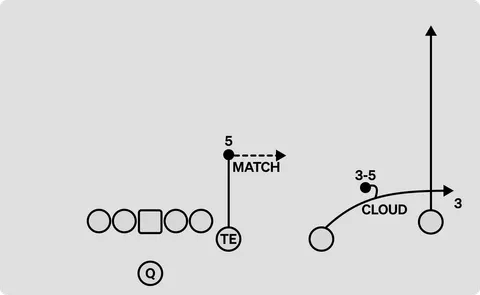
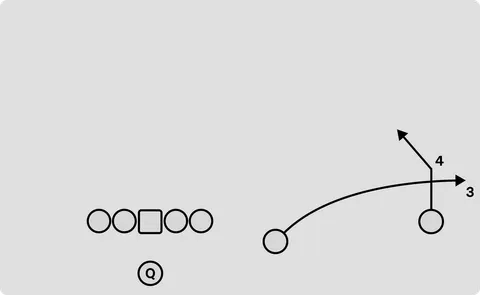
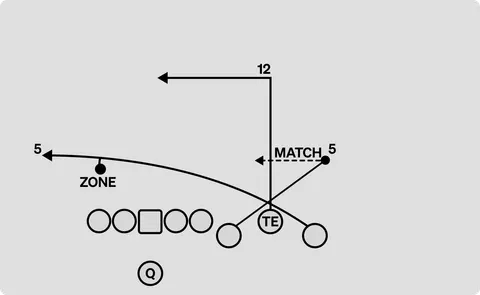
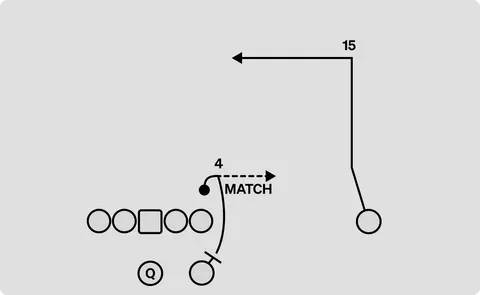
Before the snap, give the single receiver a yes or no: free access, or press with no deep help, is a yes. At the snap, watch the backside safety's departure angle: poaching No. 3 leaves the single receiver alone; staying home leaves the No. 3 seam.
Common Questions
Why does trips cause problems for Cover 4?
Quarters has the corner on No. 1 and the safety reading No. 2. A third receiver on the same side has no one assigned on a vertical, so the defense has to borrow a defender.
Who covers the No. 3 receiver in quarters?
Most often the backside safety, which leaves the backside corner alone on the single receiver. Some defenses have a linebacker carry No. 3 or rotate to a different coverage.
What should a quarterback throw against quarters out of trips?
Read the backside safety at the snap: poaching toward trips, the single receiver is one on one; staying home, the No. 3 seam is open. Underneath, Stick toward trips attacks the outside defender.