How to beat it
How to Beat Zone Coverage
Beat zone coverage by putting two receivers on one defender: high and low (Curl, Snag), side to side (Stick), or three on two with Sail. Read that defender and throw to the receiver left uncovered, on time, into the windows between zones.
Updated October 2026
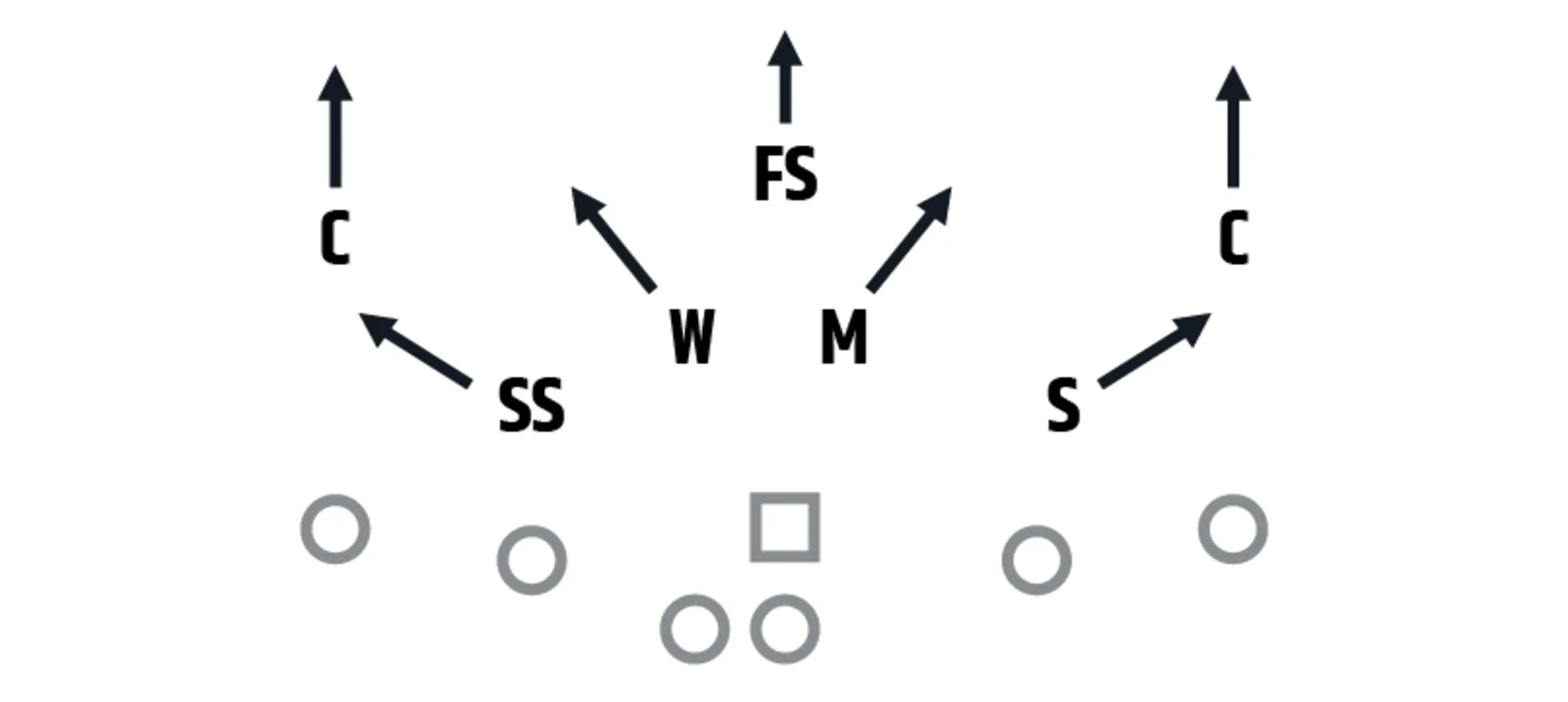
Where Each Zone Coverage Is Soft
| Coverage | Deep / under | Soft spots | Concepts to call |
|---|---|---|---|
| Cover 2 Tampa | 2 deep, plus the Mike running the middle hole; 4 under | Sideline hole, short middle under the Mike, the seam the Mike does not take | Snag, Sail, Drive, seams away from the Mike |
| Cover 3 | 3 deep, 4 under | Seams, Curl/Flat defender, in front of the corners | Stick, Curl, Sail, Hitch |
| Cover 4 | 4 deep, 3 under | Flats, in front of the corners, underneath crossers | Stick, Tosser, Option, Hitch, Mesh |
Five Ways to Beat Zone and the Read
- High-Low One Defender
One receiver in front of a defender and one behind: Curl on the flat defender, Snag on a cloud corner, Drive on the middle linebacker. If the defender drops, throw the short route. If the defender comes up, throw the deep one.
- Stretch a Defender Side to Side
Two receivers at the same depth, one inside and one outside a defender. In Stick, the stick at 5 yards and the flat bracket the Curl/Flat defender. Read that defender's first move and throw away from it.
- Overload One Side
Three receivers at three depths (deep, intermediate, short) against two defenders on one side. Sail does this. Read high to low and throw the level nobody covered.
- Attack the Seams
Verticals by the inside receivers stress the deep defenders. Against Cover 3, throw to the side the post safety leaves, unless a Curl/Flat defender carries that seam. Against Cover 2 Tampa, throw the seam the Mike does not take. Against Cover 4, with four deep, look underneath instead.
- Sit in the Window
A receiver who settles between two zone defenders, facing you, is open if the ball gets there before they close. Stick, snag and curl routes do this, and Mesh shallows sit down against zone instead of running through.
Concepts That Beat Zone Coverage
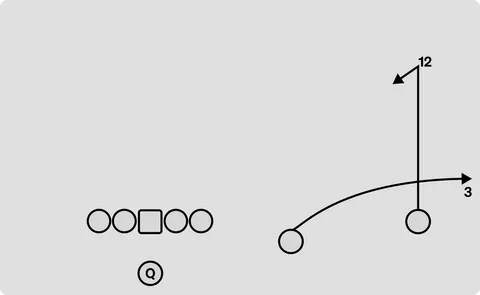
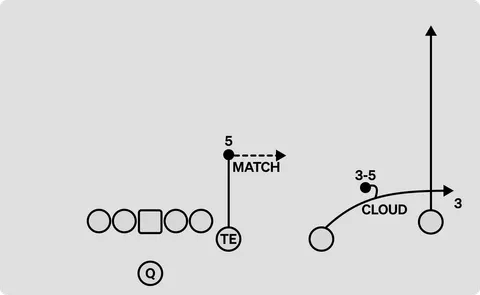
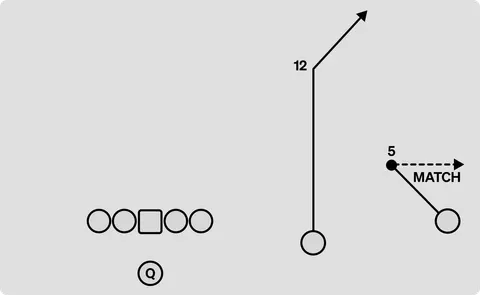
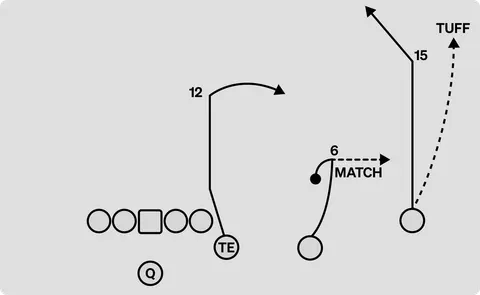
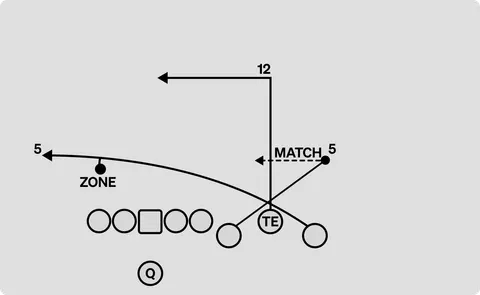
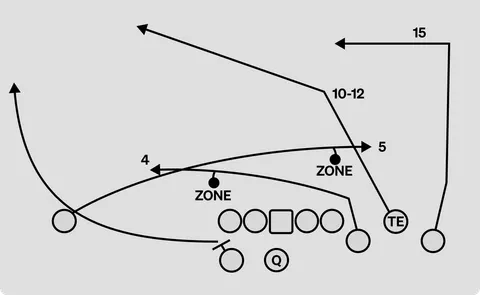
How the Quarterback Reads Zone
Zone defenders line up off the ball, watch you and do not follow motion. First read the contour: MFC (middle field closed: one post safety in the middle, 15 to 18 yards deep between the hashes) or MFO (middle field open: two high safeties). The number of deep defenders after the snap (two, three or four) then names the coverage and shows you the holes.
After the snap, read the one defender the concept puts in conflict, and use your eyes to move that defender: a look toward the seam can freeze a safety, and a look at the flat can widen the curl defender. Throw on time, because a window open on the third step is often closed on the fifth.
Mistakes to Avoid
- Throwing to a receiver running through a zone into the next defender. Throw where the receiver will sit, or lead the receiver into open grass.
- Staring down the target. Zone defenders break on your eyes.
- Running man beaters into zone, like a go route at a bailing Cover 3 corner, or an Omaha (a quick break to the sideline) into a Cover 2 Tampa cloud corner sitting in the flat.
- Not adjusting to rotation. A two-high look that rolls to one-high after the snap is a different coverage, so read it again.
Common Questions
What is the best way to beat zone coverage?
Put two receivers on one defender and read that defender. High-low concepts like Curl and Snag, horizontal stretches like Stick, and three-level concepts like Sail all do this.
What routes beat zone defense?
Routes that settle in the windows between defenders: curls, hitches, stick and snag routes, in routes behind the linebackers and seams between deep defenders. Flats paired with a curl or stick force underneath defenders to choose.
Does Mesh work against zone?
Yes. Against zone the shallow crossers settle in the open windows, and the deeper routes high-low the linebackers.