Coverage comparison
Man vs Zone Coverage
In man coverage each defender covers a receiver wherever that receiver goes. In zone each defender covers an area and passes receivers on. Beat man with routes that make defenders chase through traffic or change direction; beat zone by putting two receivers on one defender and throwing into the windows. Alignment, motion and the defenders' eyes tell you which it is.
Updated October 2026
Man and Zone Side by Side
| Man coverage | Zone coverage | |
|---|---|---|
| Each defender covers | A receiver | An area of the field |
| Defenders' eyes | On the receiver | On the quarterback |
| Against motion | A defender runs with the motion | Defenders bump over or the safeties rotate |
| Alignment | Directly on receivers, often press | Off the ball, spread to landmarks |
| Strong against | Routes that sit down in windows; frees the defense to blitz | Deep balls, scrambles, big plays after the catch |
| Weak against | Crossers, rubs, leverage breaks, isolation, scrambles | High-low and side-to-side stretches, three-level concepts like Sail, routes that sit in windows |
| Common examples | Cover 1, Cover 1 Robber, Cover 5 (2-Man) | Cover 2 Tampa, Cover 3, Cover 4, Cover 6 |
| Classic beaters | Mesh, Drive, Slant, Stick (breaking out) | Stick, Curl, Snag, Sail |
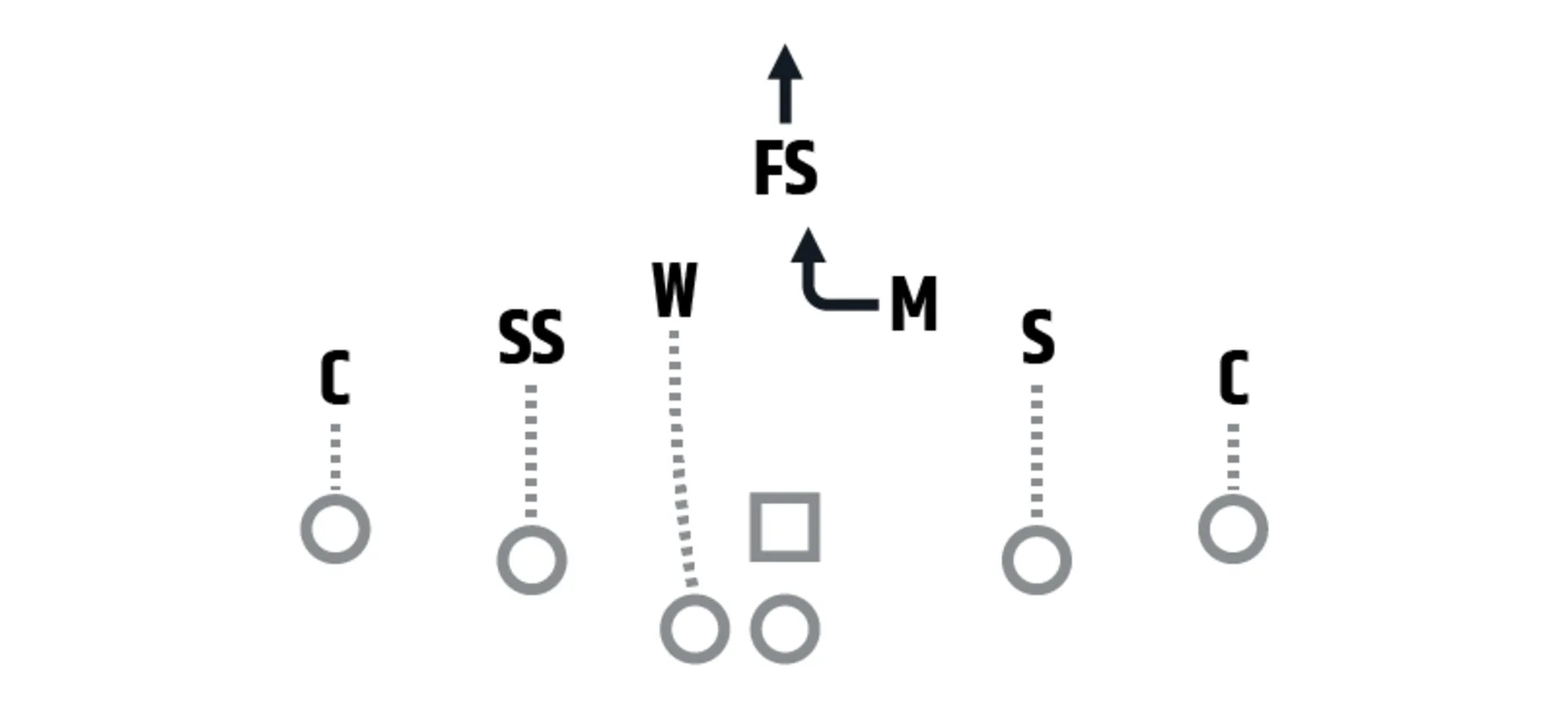
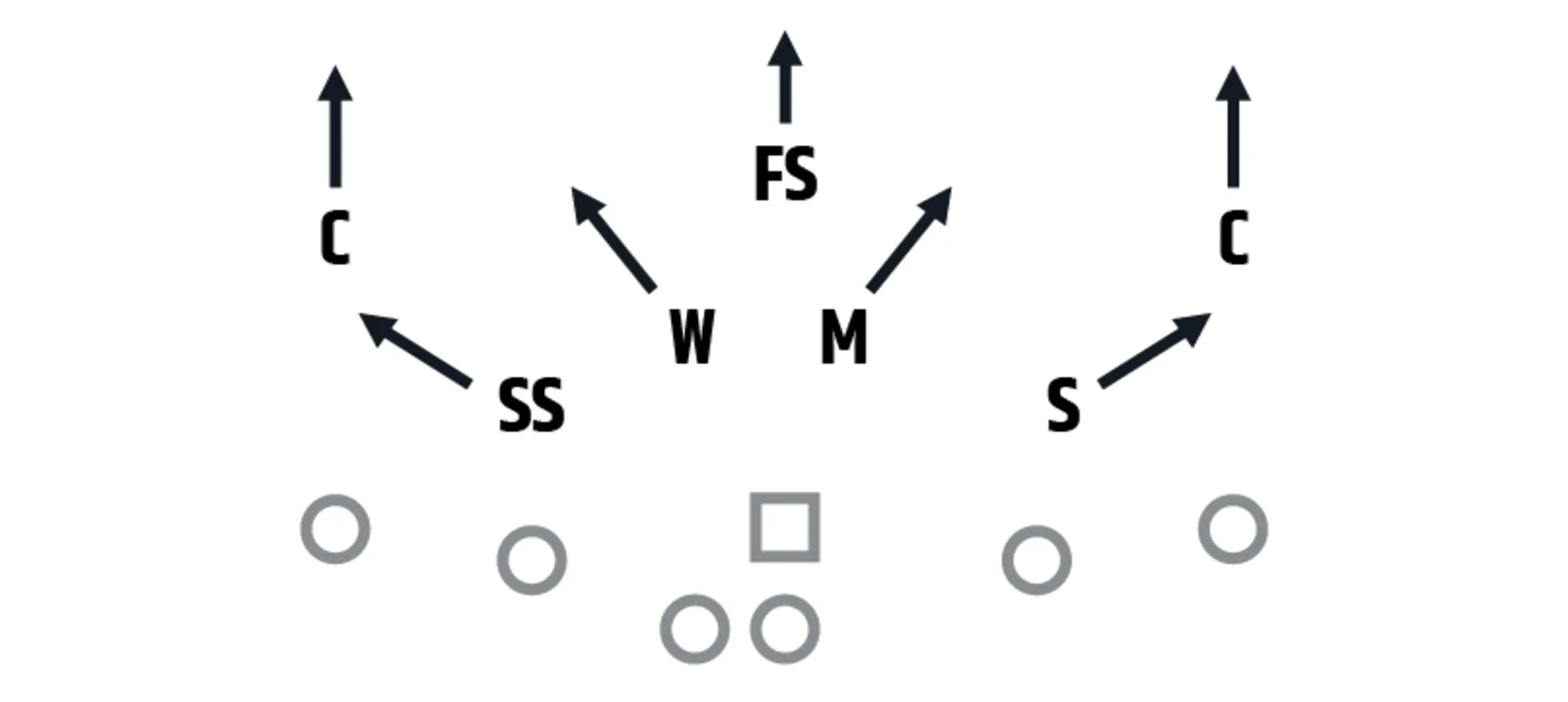
Why Cover 1 and Cover 3 Are the Hard Pair
Both are MFC (one high safety), so the safety count doesn't separate them. Look underneath: in Cover 1 the corners and linebackers press or align tight on receivers (MFC-Man) and follow them, while Cover 3 corners bail to deep thirds and the underneath defenders run to spots.
The beaters are opposite, so this read matters most. A crosser beats Cover 1 but runs into Cover 3's Hook/Curl defenders. A slant works against both if you read it: away from the rat in Cover 1, behind a widening Curl/Flat defender in Cover 3. A curl that sits in a window beats Cover 3 but is covered by the man defender sitting on it in Cover 1.
How to Tell Man from Zone
- Motion
Send a receiver across the formation. A defender running with it means man; defenders sliding a step or a safety rolling means zone. It's a strong pre-snap tell, along with alignment.
- Alignment and Eyes
Press and eyes on receivers suggest man. Cushion and eyes in the backfield suggest zone.
- The Corners at the Snap
A corner who turns and runs with the receiver is in man. One who bails to a spot or squats in the flat looking at you is in zone.
- The Receiver Who Crosses
Watch one crossing route. A defender trailing it all the way across means man; a receiver handed from one defender to the next means zone.
Match Coverage Blurs the Line
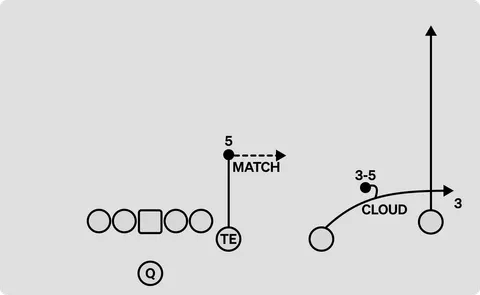
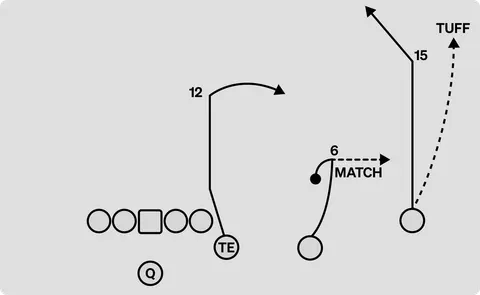
Match zone starts in zone and plays man-like rules once the routes declare. Cover 4 quarters, with safeties reading the inside receiver, is the best-known example, and Cover 3 is often played this way too. Routes that break away from leverage, like stick and option routes, beat both halves of it.
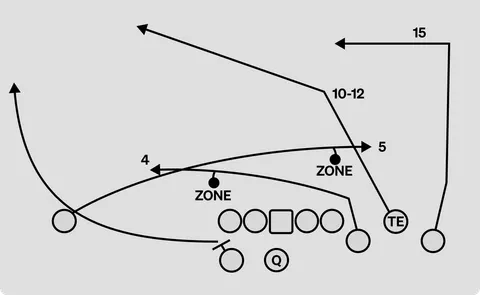
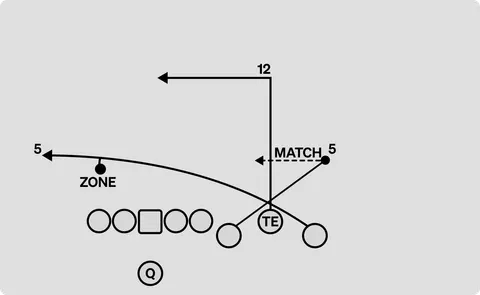
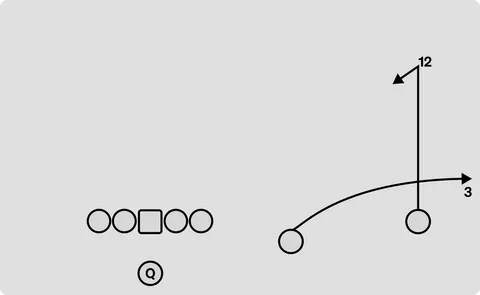
Concepts for Each
Common Questions
Is man or zone coverage better?
Neither in general. Man lets a defense play tight and blitz, but one lost matchup can be a big play. Zone limits big plays but leaves windows, so most defenses mix both.
What is the easiest way to tell man from zone?
Alignment and motion. Press and tight defenders point to man, cushion to zone. If a defender follows a receiver across the formation before the snap, it's man; if the defense shifts or rotates instead, it's zone. Confirm it at the snap.
Is Cover 3 man or zone?
Zone. The two corners and the post safety each take a deep third, and four defenders split the short area. Match versions behave like man once routes declare.