How to beat it
How to Beat Man Coverage
Beat man coverage by making defenders change direction or fight through traffic: crossers, rubs from stacks and bunches, breaks away from the defender's leverage, backs on linebackers, and one-on-one throws outside where deep help cannot reach. Confirm it is man from the alignment (press and tight defenders) or with motion, then count the help behind it: one post safety (Cover 1) or two (Cover 5).
Updated October 2026
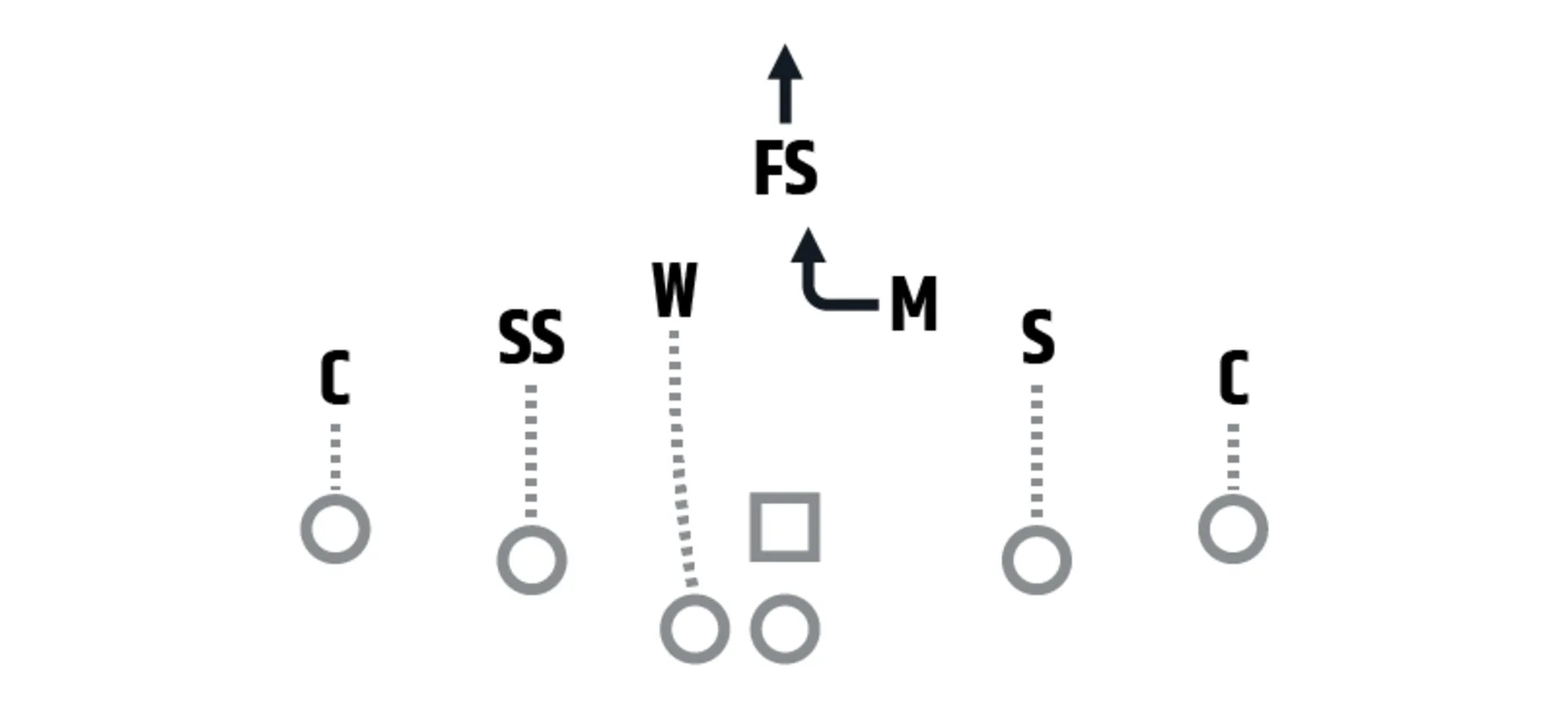
Cover 1 and Cover 5: What Beats Each
| Cover 1 | Cover 5 (2-Man) | |
|---|---|---|
| Deep help | One post safety in the middle | Two safeties, deep halves |
| Usual pressure | Four or five rushers, often with a rat in the short middle | Usually four rushers |
| How defenders play | Tight or off, with the post safety deep and the rat helping inside | Underneath and trailing, with help over the top |
| Where it is weak | Crossers, rubs, outside isolation | Crossers, quarterback scrambles, the deep middle |
| Best answers | Mesh, Drive, Slant, Stick, isolation go routes | Mesh, option routes, verticals between the safeties, scrambles |
How to Know It Is Man
Man defenders line up on receivers, often in press, and watch the receiver instead of you. Press and tight alignment is the first tell (MFC-Man when one post safety is deep in the middle), and motion confirms it: a defender who travels across the formation with the receiver means man. Confirm at the snap.
Six Ways to Beat Man Coverage and the Read
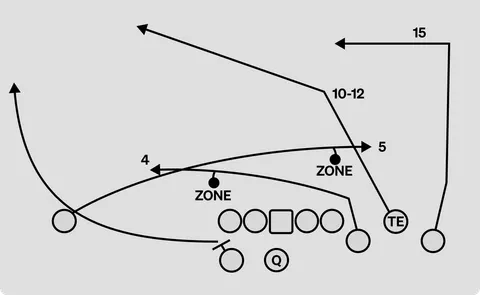
- Crossers (Mesh, Drive)
A defender chasing a receiver across the field has to get through traffic while the receiver pulls away. Against Cover 1, find the rat first, then lead the crosser away from the trailing defender.
- Rubs from Stacks and Bunches
Receivers starting close together release on crossing paths, so their defenders collide or switch. Receivers cannot block before the throw, so the rub has to come from running the route through traffic, never from a pick. Throw to whoever comes out clean.
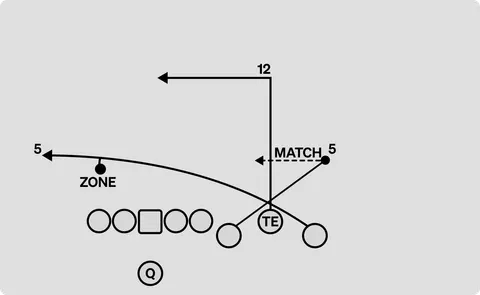
- Breaks Against Leverage (Slant, Stick, Snag)
A man defender picks a side; break to the other one. A slant beats outside leverage, and a stick or snag that breaks out beats inside leverage. The defender's alignment before the snap tells you which.
- The Back on a Linebacker
Rails and angle routes match a running back against a linebacker in space. When the back releases outside, throw it up the sideline before the safety can get there.
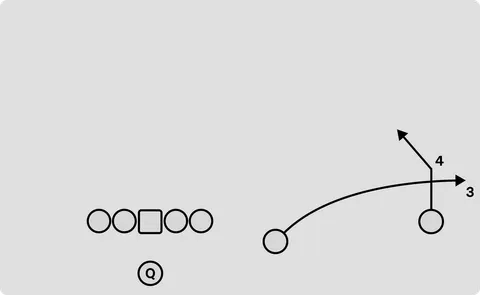
- Isolation Outside
Against Cover 1 the post safety cannot reach the sideline on time, so isolate your best receiver there (the backside of trips is the classic spot). A corner sitting on top gets the back shoulder or the comeback; a trailing corner gets the go route over the top. Before the snap, give that receiver a yes or no: press with no deep help is a yes.
- The Quarterback's Legs
Man defenders play with their backs to you. If the first read is covered and the pocket opens, run. Against Cover 5, with tight coverage and deep help, it is one of the best answers, along with crossers and a vertical that wins between the safeties.
Concepts That Beat Man Coverage
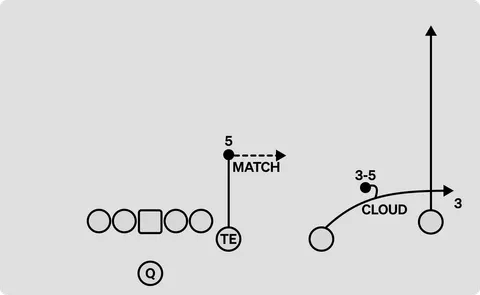
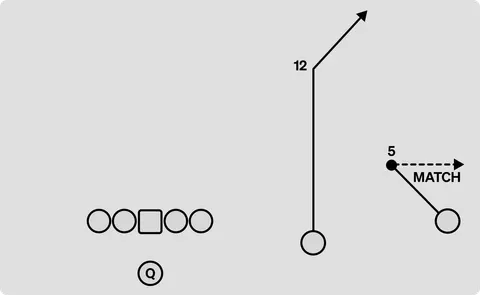
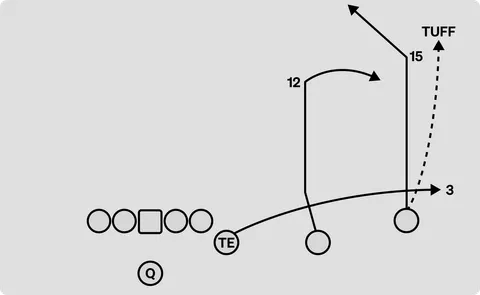
Mistakes to Avoid
- Waiting for a receiver to come open. Against man, open happens once, on the break. Throw it on time.
- Throwing a hitch against press. A pressed receiver often cannot reach the route's depth cleanly, so use slants, go routes and crossers.
- Ignoring the rat or robber. A crosser thrown into the defender sitting in the middle is a turnover.
- Throwing deep into the help. A deep ball against man wins only away from the safety.
Common Questions
What routes beat man coverage?
Crossers, slants, routes that break away from leverage like the stick and the Omaha (a quick break to the sideline), rubs from bunched receivers, rails and angle routes from the backfield, and go routes or comebacks outside against a corner with no help.
How can a quarterback tell man from zone?
Press and tight alignment points to man, cushion to zone. Motion confirms it: a defender who follows the receiver across means man. Man defenders also watch receivers, while zone defenders watch the quarterback.
What is the best formation against man coverage?
Bunch, because close releases cross and create natural rubs. Trips also helps by isolating the single receiver on the backside.