Flag football guide
How to Play Quarterback in Flag Football
Flag football QBs win by getting the ball out on time. With no linemen, you face one rusher (most college and women's 7v7 rules, and most 5v5 leagues) or no rush and a pass clock (7v7 passing tournaments). That leaves quick decisions, accurate short and intermediate throws, and the same coverage reads tackle QBs make.
Updated October 2026
How Flag Is Different for a Quarterback
In tackle football the line buys time and forms a pocket. Flag has no pocket in the usual sense: nobody is coming, or one rusher is, and either way a clock is running in your head.
Rules vary a lot by league and age group: field size, where the rusher starts, pass clock length, if and when the QB can run, no-run zones near the goal line and first-down line, and how many players are on the field. Read your league's rule book first. The reads and throws below hold up in every version.
7v7: One Rusher or a Short Clock
7v7 has no linemen and comes in two main forms. Under most college and women's 7v7 rules, seven defenders line up, one of them (usually the middle linebacker) rushes on almost every snap, the QB may run and the center is an eligible receiver. Offseason 7v7 passing tournaments for high school players usually have no rush: the QB has a short throw clock, commonly about four seconds, and cannot run.
One rusher gives you a few seconds before your flag is pulled, and in a tournament the clock is the rush. Either way you cannot hold the ball. Good 7v7 QBs set the read before the snap, get their eyes to the key defender at the top of a short drop, and throw on rhythm.
With little run game to stop, 7v7 defenses play real coverages (Cover 1, Cover 2, Cover 3 and Cover 4) with disguises and rotations.
Flag and 7v7 Coverages to Know
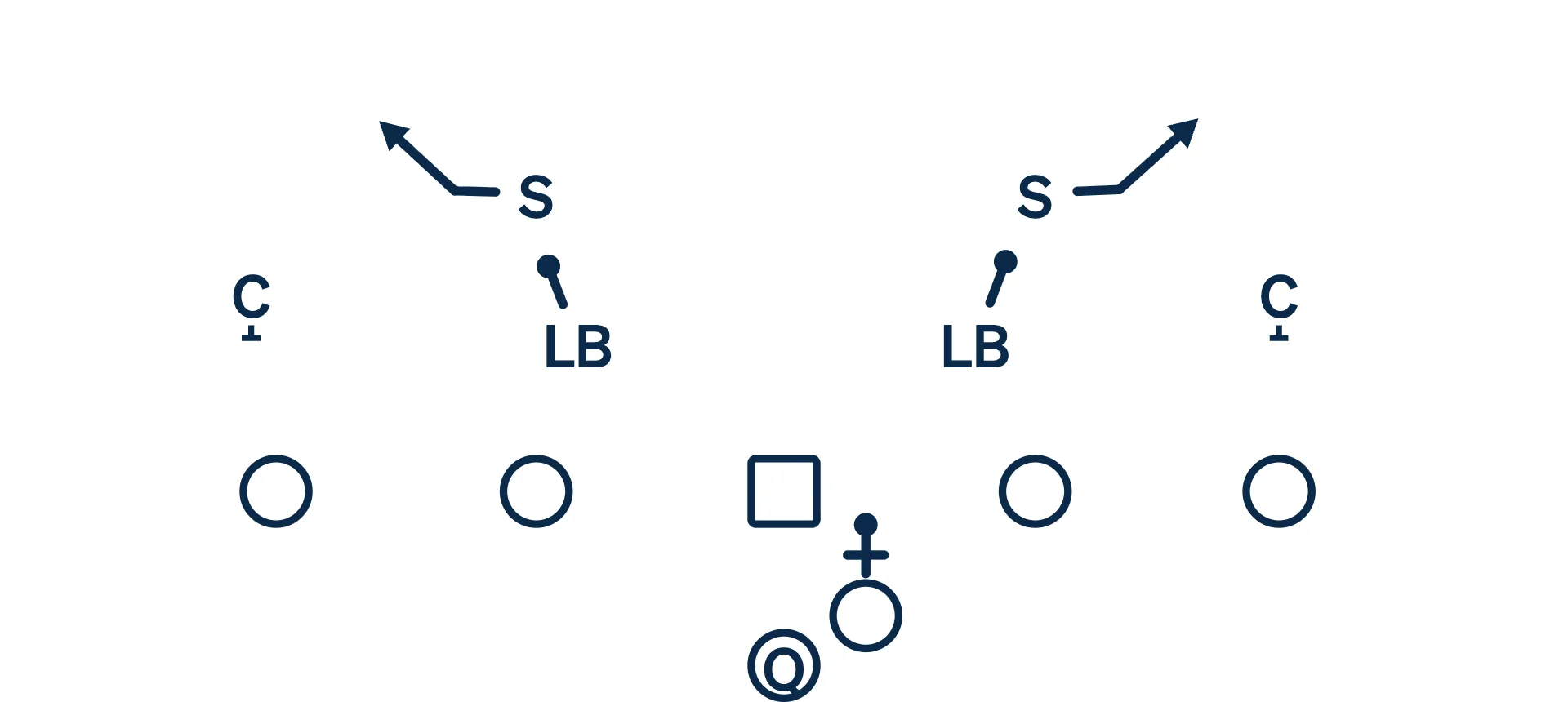
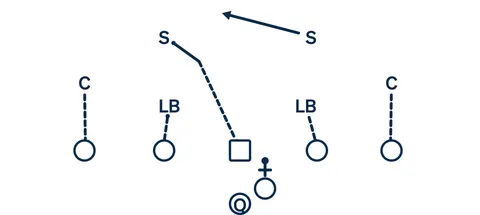 Cover 13 plays to rep against
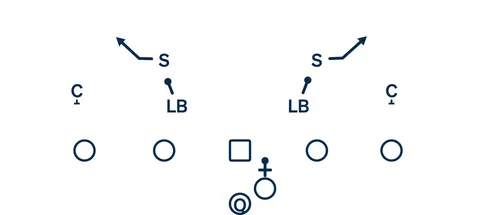 Cover 23 plays to rep against
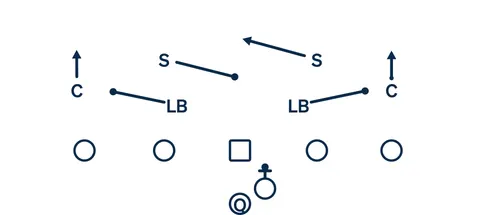 Cover 33 plays to rep against
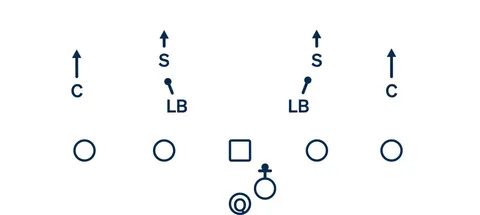 Cover 43 plays to rep against
5v5: The Rusher and the Pass Clock
5v5 is the common youth format, where many young QBs start. The defense can usually send a rusher from a marked distance off the line, and you have a pass clock. Some leagues limit whether the QB can run, so check your rules.
With five a side, the field is wide open. Receivers have room, but every defender has a lot of grass to cover, so most 5v5 defenses play man or a simple zone. Reads are usually simpler than in 7v7.
Handling the Rusher
The rusher is the only pressure you face. Have a plan for it before the snap.
- Find the rusher pre-snap. The side the rusher lines up on tells you which way you will slide.
- Do not drift backward. It gives the rusher more time and puts you farther from your receivers, and a short sidestep and a throw beats a retreat.
- Slide away from the rusher, eyes downfield, and stay off a sideline you cannot use.
- Have a hot throw. Your first read should beat a rusher who comes free fast, and short routes to the rush side are often open because the rusher is one less defender in coverage.
- Throw on the move. You rarely get a clean, set throw against a rusher, so practice squaring your shoulders while moving.
Reading Zone and Man in Flag
The tells match tackle football, with fewer bodies to read: safeties first, then the corners and underneath defenders. Defenders across from receivers with eyes on them lean man, defenders spaced at spots with eyes on you lean zone, and a defender who runs with motion leans man.
Against man, throw to the receiver running away from the defender: crossers, out-breaking routes against inside leverage, and option routes that break away from the defender's shoulder. Some leagues penalize intentional picks, so know the line on rub routes.
Against zone, find the hole: usually between the underneath and deep defenders, and along the sideline behind a squatting corner. Low-high and side-to-side reads work here too: put two receivers in one defender's area and throw to the one that defender leaves.
Snap to Throw in Flag Football
- Before the Snap
Safeties, corners, man or zone, and the rusher. Pick your side and your first read.
- Catch the Snap and Get the Eyes Up
Watch the ball in, then get your eyes downfield. Every look at the ball after that costs clock.
- First Read at the Top of the Drop
Flag drops are short, often three steps from the gun or less. Decide on the first read as you finish it.
- Second Read or Move
First read covered: go to the second. Rusher coming: slide, eyes on the second read.
- Throw Before the Clock
A throwaway or a checkdown beats a sack or a clock violation.
Girls Flag Football
Girls flag football is now a sanctioned high school sport in a growing number of states, and many players learn QB for the first time through it. Everything here applies, and QBs who have learned to see the defense have a real head start.
What Makes a Good Flag Quarterback
- Decision speed: with a clock and a rusher, the ball has to come out on rhythm.
- Accuracy over arm strength. Most flag throws are short and intermediate, so hitting the receiver in stride beats distance.
- A quick release. A long windup is a gift to the rusher.
- Knowing the coverages. Fewer defenders does not mean easier reads, especially in 7v7, where defenses rotate and disguise.
How to Practise
Our flag football QB drills page has drills for each of these. Practise with a clock and a live rusher as often as you can.
For the reading part, film and coverage quizzes help.
Common Questions
Can the quarterback run in flag football?
It depends on the league. Most college and women's 7v7 rules let the QB run, while 7v7 passing tournaments usually do not. 5v5 leagues vary, and some allow it only in certain situations, so check your rule book.
How long does a flag football quarterback have to throw?
It varies by league and age group. 7v7 passing tournaments, which usually have no rush, commonly use a pass clock of about four seconds. In leagues with a rusher, the rusher sets your time, with or without a clock.
Do flag football defenses play zone or man?
Both. 7v7 defenses play real coverages such as Cover 1, Cover 2, Cover 3 and Cover 4. 5v5 defenses, with fewer players and more space, more often play man or a simple zone.
Is reading a defense in flag the same as in tackle football?
The tells are the same: safeties, corners, alignment, eyes and motion. There are fewer defenders, but the clock and the rusher make the timing tighter.